
Brake Warning Signs Drivers Should Report Immediately
April 15, 2026
Discover More On:
Brake problems rarely get better by waiting. In a working fleet, even a small change in brake feel or stopping performance can turn into a safety issue, a roadside failure, or a costly downtime event.
That is why brake concerns should be reported as soon as they show up, especially on medium-duty and heavy-duty trucks that work hard every day. At Champion FleetCare, brake service is one of the most important repair categories we handle for commercial vehicles across Lenexa and the Kansas City metro.
For fleets running through Lenexa, along I-35, around warehouse routes, or through stop-and-go commercial traffic, fast reporting matters. A warning light, a soft pedal, or a grinding noise may start small, but it can affect route reliability and driver safety.
Dashboard Brake Warning Signs You Should Never Ignore
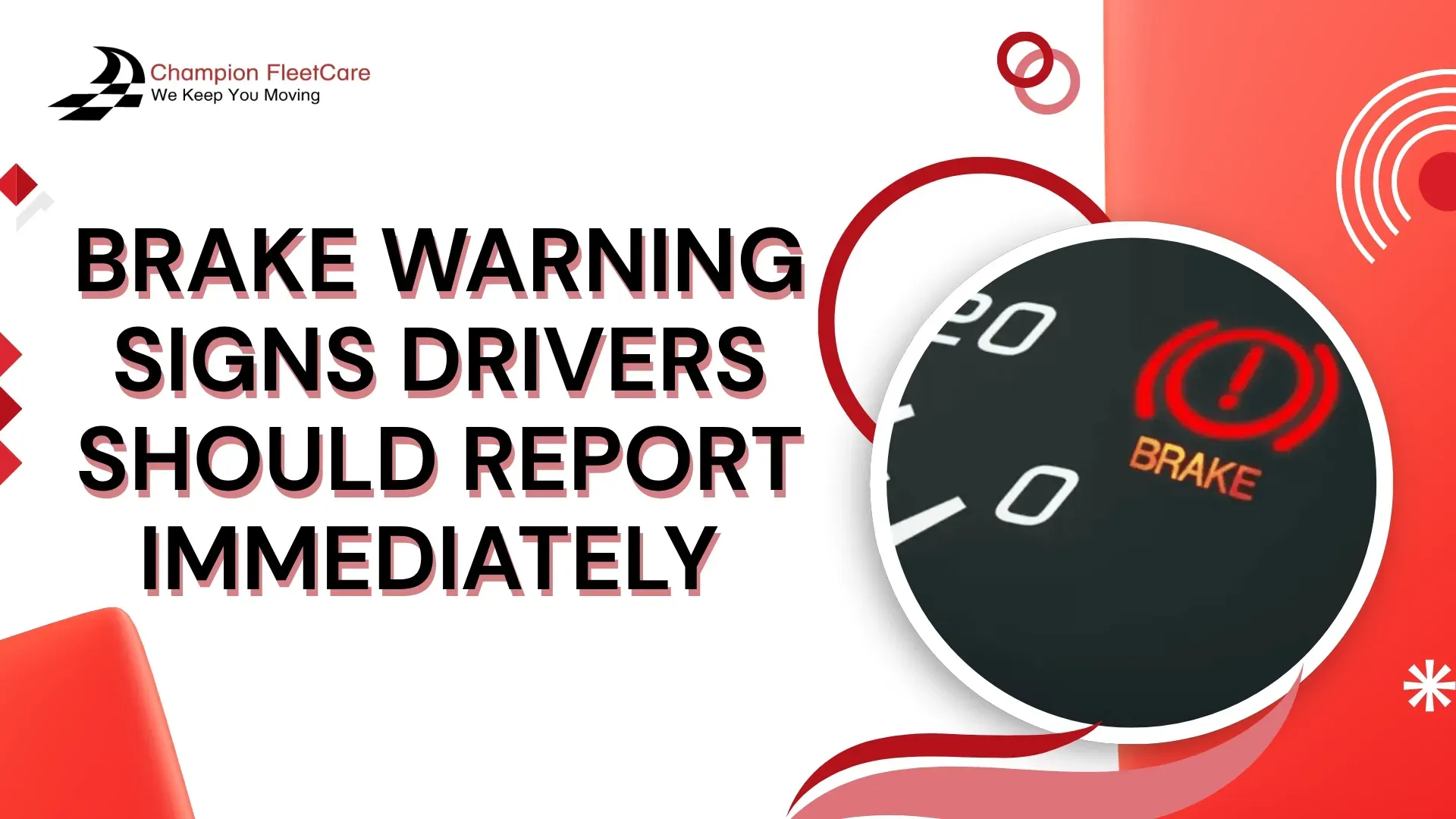
Dashboard alerts are often the first sign that something needs attention. Drivers should not assume a brake warning light is minor just because the truck still moves normally. Brake, ABS, and traction-related warnings can point to real system faults that need diagnosis.
What brake warning lights can mean for fleet vehicles
A brake warning light may point to low brake fluid, hydraulic issues, sensor faults, or a deeper brake system problem. An ABS light can indicate that the anti-lock system is not working the way it should, which can affect stability and controlled braking in poor conditions.
Why ABS and brake system alerts need immediate attention
ABS and brake system alerts matter because they can signal reduced braking support or a system that may not respond the same way in an emergency. For fleet managers, that means a truck with warning lights should be documented and inspected, not left in rotation as if nothing changed.
Changes in Brake Feel and Stopping Performance
Drivers often notice brake trouble before a scan tool ever does. That is why clear driver reporting is such a big part of fleet brake management.
Soft brake pedal, longer stopping distance, or pulling
A soft pedal, extra pedal travel, longer stopping distance, or a truck that pulls while braking are all serious warning signs. These changes can point to hydraulic issues, worn components, air in the system, or related brake faults that should be checked before the truck keeps working.
Signs your truck brakes need service before they get worse
If a driver says the truck does not stop like it used to, that report should be taken seriously. Small changes in feel often show up before a larger failure, which is why these are some of the clearest signs your truck brakes need service before the repair becomes more involved.
Unusual Noises That Point to Brake Trouble
Noise is one of the easiest brake symptoms to spot. It is also one of the most ignored.
Squealing, grinding, or metal-on-metal sounds
Squealing can point to worn brake material or hardware issues. Grinding or metal-on-metal sounds are more serious and may suggest the braking surface is already being damaged. In a fleet setting, these noises should be reported right away, not saved for the next general service visit.
Why brake noises often signal worn pads or damaged rotors
Brake noise often means friction components are no longer wearing evenly or safely. Once that starts, continuing to drive the vehicle can increase repair cost by affecting rotors, drums, or related hardware that might have been protected with earlier reporting.
Vibrations, Pulsation, and Steering Issues While Braking
A truck that shakes or pulses during braking is telling you something. Drivers may describe it differently, but the pattern matters.
What brake pedal pulsation can mean for fleet trucks
Brake pedal pulsation can point to uneven brake surfaces, heat-related wear, or parts that are no longer operating smoothly under braking load. On fleet trucks, that can affect confidence, stopping consistency, and the driver’s ability to control the vehicle under heavier use.
How vibration during braking may point to rotor or suspension issues
Not every vibration comes from the same place. Sometimes the issue is directly in the braking surface, and other times it overlaps with steering or suspension wear. That is one reason a reported vibration should lead to inspection, not assumptions. At Champion FleetCare, we treat these reports as useful early warnings because they often help prevent bigger downtime later.
Visible Brake Problems Drivers Can Spot Early
Some brake issues are not just felt. They can also be seen or smelled.
Leaking brake fluid or low brake fluid warning signs
Brake fluid loss is a major concern because it can affect hydraulic pressure and braking response. If a driver sees fluid near a wheel area, notices a warning light, or reports a sudden change in pedal feel, the truck should be checked before it returns to normal use.
Uneven wear, smoke, or burning smells from the brakes
Smoke, burning smells, or visible signs of brake overheating should always be treated as urgent. Uneven wear can also point to brake imbalance, dragging components, or service needs that should be documented immediately.
Why Fast Reporting Helps Prevent Fleet Downtime
The biggest difference between a manageable brake repair and a disruptive one is often how quickly the issue gets reported. Fleet managers depend on drivers to say something before the truck becomes unsafe or unavailable.
How early reporting reduces bigger repair costs
Early reporting gives the maintenance team a chance to inspect the truck before brake damage spreads to more expensive components. That usually means shorter downtime, clearer scheduling, and a better chance of solving the issue before it affects operations across the fleet.
Why fleet brake warning signs should be documented right away
Documenting fleet brake warning signs helps fleet brake maintenance decisions become more consistent.
Driver notes, warning light history, and inspection findings all make it easier to spot trends and act before one truck problem turns into a larger fleet pattern. We also provide electronic inspections with photo reports, which helps create clearer repair decisions for fleet operators.
Schedule Fleet Brake Repair in Lenexa, KS with Champion FleetCare
If your drivers are reporting warning lights, soft pedals, grinding, pulling, or brake vibration, we can help you get those vehicles inspected and repaired before the issue grows.
Champion FleetCare provides mobile and in-shop fleet service in Lenexa for commercial trucks, trailers, and mixed fleets, with support designed to reduce downtime and keep working vehicles safer on the road.
You can find us at 13904 W 108th St, Lenexa, KS 66215 and reach us at (913) 498-9999 to schedule fleet brake repair Lenexa KS service. We serve Lenexa, Olathe, Overland Park, and surrounding Kansas City metro fleet routes.
Frequently Asked Questions
What brake warning signs should fleet drivers report first?
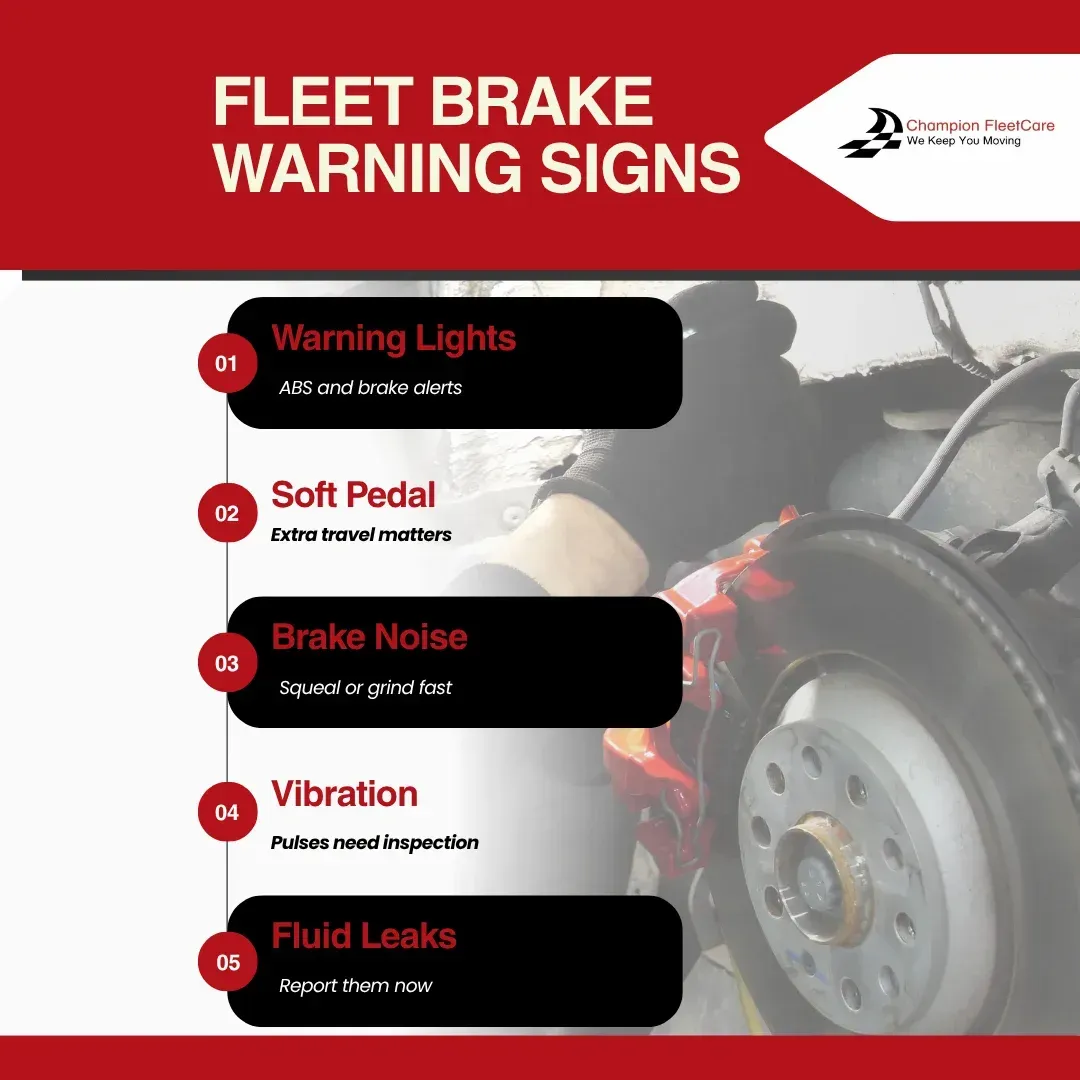
Drivers should report any brake warning light, ABS alert, soft pedal, longer stopping distance, pulling, grinding, vibration, burning smell, or visible fluid leak right away. Even if the truck still moves normally, those signs can point to problems that get worse if they are ignored.
Is an ABS light always an emergency?
It should always be treated seriously. The truck may still brake, but the anti-lock system may not respond properly in a hard stop or poor-traction situation, which is why fast diagnosis matters.
Can a soft brake pedal still be dangerous if the truck stops?
Yes. A soft pedal or extra pedal travel can point to hydraulic or control issues, and those conditions can become more serious if the vehicle stays in service without inspection.
Why do brake noises matter so much for fleets?
Noise often appears before a full brake failure. Catching squealing or grinding early can help prevent larger damage, longer downtime, and more expensive parts replacement.
Why should fleet managers document brake complaints immediately?
Documentation helps connect driver feedback with inspection results and service planning. That makes it easier to protect uptime, track repeat issues, and decide which units need fast attention first.
Takeaways
Brake issues should never be treated as background noise in a working fleet. Warning lights, pedal changes, noises, vibration, and fluid leaks are all signals that a truck may need attention now, not later. For fleet managers, quick reporting is one of the best ways to prevent larger repair costs and surprise downtime. The sooner drivers report brake concerns, the easier it is to inspect the truck, plan the repair, and keep the rest of the fleet moving.
Discover More On:
With 26 years of experience in mechanical design at an engineering firm, I embraced the challenge of launching my own business in 2020.
I thrive on the dynamic nature of solving technical problems and take pride in supporting my customers and community. Every day brings new opportunities to learn and grow, making my work both exciting and fulfilling.