

To spot worn brake pads and rotors early, listen for squeaking or grinding noises when braking. If you notice decreased responsiveness, longer stopping distance in loaded vehicles, pulling to one side, or vibration, it’s time for a brake check. Catching wear early through regular maintenance helps reduce downtime, supports DOT inspection prep, and keeps your fleet safer on Kansas City–area routes.
Key Takeaways
- Listen for squeaking or grinding noises when braking, indicating worn brake pads that need immediate attention.
- Monitor for decreased braking responsiveness and longer stopping distances, suggesting potential pad wear.
- Inspect rotors for visible scoring or grooves, which signal wear and require replacement.
- Pay attention to unusual vibrations during braking, as they may indicate warped rotors or worn pads.
- Conduct regular inspections to catch wear early, ensuring safety and compliance with DOT regulations.
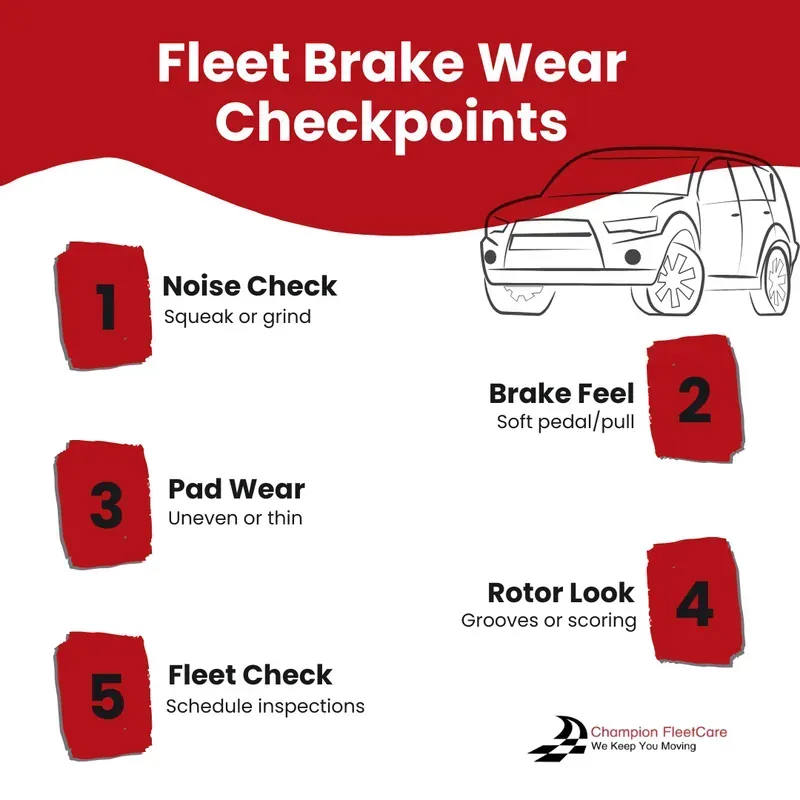
Quick Scan: 60-Second Fleet Brake Wear Check
- Noise: squeal, squeak, grinding
- Feel: pulsation or vibration when braking heavy trucks
- Stopping: longer stopping distance (especially for loaded vehicles)
- Direction: pulling left or right under braking
- Visual (rotors): scoring and grooves on brake rotors
- Visual (pads): uneven brake pad wear on delivery vehicles
Why Early Brake Maintenance Is Critical for Fleets
When you catch early warning signs of brake failure, you can prevent major issues down the road. Regular brake checks not only keep your fleet safe but also reduce downtime, saving you time and money. Staying proactive with maintenance means your vehicles stay on the road longer and perform better.
Early warning signs of fleet brake failure
Recognizing early warning signs of brake failure can be a game-changer for fleet maintenance. You should always be on the lookout for unusual noises like squeaking or grinding when brakes are applied. If you notice a decrease in responsiveness or a spongy brake pedal, that’s another essential indicator. Vibration or pulling to one side during braking can also signal trouble. Additionally, check for warning lights on the dashboard; they often indicate underlying issues. Finally, if you find uneven wear on brake pads or rotors during inspections, it’s time to take action. Staying vigilant about these early warning signs of fleet brake failure can save you time and money, ensuring your fleet remains safe and efficient on the road.
Reducing downtime with scheduled fleet brake checks
Ignoring early warning signs of brake issues can lead to significant problems down the line, making scheduled fleet brake checks an essential part of maintenance. By proactively addressing brake wear, you can catch minor issues before they escalate, saving time and money. Regular inspections help you identify worn pads and rotors, ensuring your fleet operates safely and efficiently.
Reducing downtime with scheduled fleet brake checks means you’re fixing brake wear on your schedule, not when a truck has to be pulled from service mid-route. Regular inspections catch pad wear, rotor damage, and brake hardware issues before they trigger longer stops, vibration complaints, or DOT-related surprises. For fleets running stop-and-go routes, heavy loads, or tight delivery windows, a consistent brake schedule helps keep trucks productive and reduces last-minute repair disruptions.
Common Signs of Worn Brake Pads on Fleet Vehicles
When you're managing a fleet, knowing the signs of worn brake pads is essential for safety and efficiency. Look out for squeaking or grinding noises when braking, as well as uneven wear on delivery vehicles that can signal deeper issues. Staying ahead of these warning signs can save you from costly repairs and keep your fleet running smoothly..
Signs of worn brake pads on work trucks
As you drive your work trucks, it’s essential to pay attention to any unusual sounds or sensations, as these can be early indicators of worn brake pads. One common sign of worn brake pads on work trucks is a squeaking or grinding noise when you apply the brakes. This sound often indicates that the pads have worn down to the metal. You might also notice a decrease in braking responsiveness or a longer stopping distance, which signals that the pads aren't gripping effectively. Additionally, if your work truck pulls to one side when braking, it could indicate uneven wear; keep an eye on these signs to guarantee your fleet remains safe and efficient.
Uneven brake pad wear on delivery vehicles
Uneven brake pad wear on delivery vehicles can lead to serious safety issues and increased maintenance costs, so it’s vital to recognize the signs early. One of the first indicators is a noticeable pull to one side when you brake, which often means the pads aren’t making equal contact. You might also hear squeaking or grinding noises, signaling that one pad has worn down more than the other. Additionally, if you notice that your vehicle’s stopping distance is increasing, it could be due to uneven brake pad wear on delivery vehicles. Regularly inspecting your brake pads and seeking professional help when you notice these signs can help guarantee your fleet remains safe and efficient on the road.
How to Identify Failing Brake Rotors
When it comes to identifying failing brake rotors, look for visible scoring and grooves on the surface. If you're inspecting semi trucks, pay attention to any unusual vibrations or noise during braking, as these can signal problems. Catching these signs early can save you from costly repairs down the line.
Scoring and grooves on brake rotors symptoms
Identifying scoring and grooves on brake rotors is essential for maintaining your vehicle's safety and performance. If you notice these symptoms, it’s vital to address them promptly.
Here are three signs to look for:
- Vibration: If you feel unexpected vibrations in the steering wheel while braking, it might indicate uneven rotor surfaces.
- Squeaking or Grinding Noise: Unusual sounds when you apply the brakes can signal worn pads or damaged rotors.
- Visual Inspection: Look closely at the rotors; deep grooves or scoring marks are clear indicators of wear that need attention. Also watch for heat spots or blue discoloration, which can signal overheating and potential rotor warping.
How to spot bad brake rotors on semi trucks
How can you tell if the brake rotors on your semi truck are on the verge of failure? First, listen for unusual noises like grinding or squeaking when you brake; these could indicate worn rotors. Next, check for vibrations in the steering wheel during braking, which often signal uneven rotor wear. Look for any visible cracks or deep grooves on the rotor surface, as these are clear signs of damage. Additionally, if you notice a decrease in braking performance or a longer stopping distance, it’s time to investigate further. Knowing how to spot bad brake rotors on semi trucks can save you from costly repairs and guarantee safety on the road. Regular inspections are key to maintaining peak performance.
Performance Issues That Signal Brake Problems
When you notice pulsation or vibration while braking, it’s a clear sign that your fleet's brakes might be in trouble. Additionally, if stopping distances are increasing in your loaded vehicles, it’s time to take action. Addressing these performance issues early can prevent more serious problems down the road.
Pulsation and vibration when braking heavy trucks
If you’re experiencing pulsation and vibration while braking your heavy truck, it’s essential to address these performance issues promptly. Ignoring these symptoms could lead to more significant problems down the road.
Here are three potential causes to take into account:
- Warped Rotors: Heat and wear can cause your rotors to warp, leading to uneven contact with the brake pads.
- Worn Brake Pads: Old or damaged pads can create inconsistent friction, resulting in noticeable pulsation and vibration when braking heavy trucks.
- Brake Caliper Issues: A sticking caliper can cause uneven pressure on the pads, contributing to the vibrations you feel.
Regular inspections and maintenance can help you catch these issues before they escalate, ensuring safer operations for your fleet.
Performance Issues That Signal Brake Problems
Experiencing increased stopping distances in loaded fleet vehicles can be a serious concern, as it often indicates underlying brake issues that need immediate attention. When your vehicles struggle to stop as quickly as they should, it may point to worn brake pads, damaged rotors, or even air in the brake lines. These stopping distance issues in loaded fleet vehicles can lead to dangerous situations, especially when carrying heavy loads. If you notice your vehicles take longer to halt, it’s essential to have them inspected by a qualified technician. Ignoring these early signs can not only compromise safety but also result in more extensive and costly repairs down the line. Stay proactive to guarantee the safety and efficiency of your fleet.
Brake Inspections and DOT Compliance
When managing a commercial fleet in Lenexa, KS, regular brake inspections are essential for ensuring safety and compliance. You'll need to prepare your vehicles for DOT brake inspections, which help avoid costly penalties and downtime. Staying on top of these inspections not only keeps your fleet running smoothly but also protects your drivers and cargo.
Brake inspections for commercial fleets in Lenexa, KS
Guaranteeing your commercial fleet's brakes are in top condition is essential for both safety and compliance in Lenexa, KS. Regular brake inspections for commercial fleets in Lenexa, KS, help prevent costly breakdowns and enhance road safety.
Here are three key aspects to focus on during your inspections:
- Check Brake Pads: Look for thin material, cracking, or uneven wear patterns.
- Inspect Rotors: Examine for grooves, heat spots, or warping indicators.
- Test Brake Fluid: Ensure fluid level is correct and look for contamination or leaks.
DOT brake inspection prep for fleet vehicles
Preparing your fleet vehicles for DOT brake inspections is essential not only for compliance but also for maintaining safety on the road. Start by reviewing your vehicle’s maintenance history to guarantee all brake components are up-to-date. Check for any visible wear on pads and rotors, as this can lead to costly repairs if overlooked. Ensure the brake fluid is at the proper level and free from contamination. Additionally, inspect the brake lines for leaks or damage. It's also wise to conduct a road test to identify any unusual noises or performance issues. By investing time in thorough DOT brake inspection prep for fleet vehicles, you’ll help guarantee that your fleet remains safe and compliant, minimizing downtime and potential fines.
Preventive Brake Service for Commercial Fleets
When it comes to your commercial fleet, preventive brake maintenance is key to keeping your trucks and service vans running smoothly. Regular brake pad and rotor replacements can save you from costly repairs and downtime down the road. By staying proactive, you can guarantee your vehicles are safe and reliable for every job.
Preventive brake maintenance for company trucks
Preventive brake maintenance is essential for keeping your fleet's trucks safe and operational.
To guarantee your vehicles remain in peak shape, consider these three key practices:
- Regular Inspections: Schedule routine brake inspections to catch any potential issues before they escalate.
- Fluid Checks: Monitor and replace brake fluid as needed to maintain peak performance and prevent corrosion.
- Component Monitoring: Keep an eye on wear indicators for pads and rotors, guaranteeing timely replacements.
Implementing these preventive brake maintenance strategies for company trucks not only enhances safety but also reduces costly repairs down the line. By being proactive, you can extend the lifespan of your fleet and guarantee your drivers stay safe on the road.
Brake pad and rotor replacement for service vans
Maintaining the brake pads and rotors in your service vans is essential for ensuring safety and efficiency on the road. Regular inspections can help you catch wear and tear before it leads to bigger issues. When it’s time for brake pad and rotor replacement for service vans, consider factors like driving conditions and load weight, as these can accelerate wear. If you notice squeaking, grinding, or reduced braking performance, don’t wait—address it immediately. Opt for quality parts during replacement to enhance longevity and reliability. Partnering with a trusted fleet maintenance provider can simplify this process, ensuring your vans are always road-ready and compliant with safety standards. Keep your fleet performing at its best with timely brake service. Service vans often wear brakes faster because they run stop-and-go routes, carry tools and payload weight, and brake frequently in traffic and neighborhoods. Building brake checks into scheduled PM helps you replace pads and rotors before they start creating vibration, noise, or longer stopping distances.
Schedule On-Site Fleet Brake Inspections with Champion FleetCare
Ensuring your fleet's brakes are in top condition is essential for safety and performance, and that's where Champion FleetCare comes in. With our mobile fleet brake service in the Kansas City metro, you can schedule on-site inspections to keep your vehicles running smoothly.
What you get with an on-site brake check:
- Checklist-based inspection to spot pad/rotor wear fast
- Clear next-step recommendations so you can approve repairs confidently
- Scheduling that fits uptime goals, including between shifts or downtime windows
Here’s how it works:
- Convenience: We come to your location, saving you time and reducing downtime.
- Expertise: Our technicians are trained to spot issues early, preventing costly repairs.
- Comprehensive Reports: You’ll receive electronic inspections with photo documentation, making repair decisions clearer.
Don’t wait for brake problems to escalate—schedule your inspections with Champion FleetCare today, and ensure your fleet remains safe and efficient on the road!
Frequently Asked Questions
How Often Should Brake Pads Be Replaced in Fleet Vehicles?
You should replace brake pads in fleet vehicles every 25,000 to 70,000 miles, depending on usage and conditions. Regular checks can help you catch wear early, ensuring safety and performance for your fleet.
What Factors Affect Brake Pad and Rotor Wear Rates?
Brake pad and rotor wear rates depend on driving habits, load weight, road conditions, and maintenance practices. If you frequently drive in stop-and-go traffic or carry heavy loads, you’ll notice faster wear.
Can Driving Habits Influence Brake Maintenance Needs?
Your driving habits act like a sculptor, shaping brake wear. Aggressive acceleration and hard braking can wear pads and rotors faster, while smooth driving extends their life. So, gentle hands can save your brakes!
Are There Specific Tools for Checking Brake Wear?
Yes, there are specific tools for checking brake wear. You’ll need a brake gauge for measuring pad thickness, a dial indicator for rotor runout, and a caliper for precise measurements. Regular checks can prevent costly repairs.
How Can Weather Conditions Impact Brake Performance?
Weather conditions can dramatically impact brake performance. Rain, snow, or extreme heat can reduce traction, leading to longer stopping distances. You’ve got to stay alert and adjust your driving to guarantee safety in varying climates.
How Do We Measure Brake Pad Thickness Without Pulling The Wheel?
You can often estimate pad thickness through wheel openings, but the most reliable method is a professional inspection. On fleet vehicles, quick checks paired with scheduled inspections help confirm wear before it becomes a safety issue.
What Should We Document For DOT Brake Inspection Prep?
Keep recent maintenance records, brake service dates, and any inspection notes. A pre-inspection brake check helps confirm pads, rotors, and brake system condition before a DOT review.
Conclusion
To summarize, keeping an eye on your fleet's brake systems is like tending to a garden; neglecting it can lead to weeds that choke out the flowers. By spotting the signs of worn brake pads and rotors early, you not only guarantee the safety of your drivers but also protect your investment. Regular inspections and proactive maintenance can keep your fleet running smoothly, so don’t wait for problems to sprout—stay ahead of the curve!