

Fleet Preventive Maintenance inspections are often scheduled by mileage, engine hours, or time; the “right” interval depends on how the vehicle is used. A common baseline for many light- and medium-duty fleets is a PM check every 3,000–5,000 miles or about every 90 days, then adjusted for severe use (high idle, stop-and-go routes, heavy loads, or harsh weather). The goal is simple: reduce breakdowns, control costs, and keep vehicles safe and compliant.
Key Takeaways
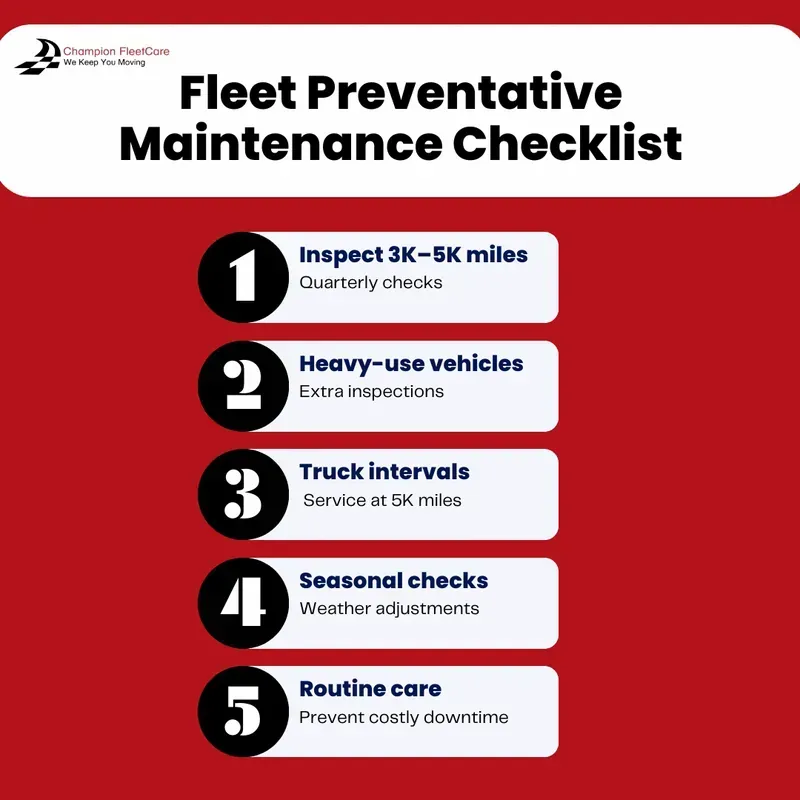
- Schedule inspections every 3,000 to 5,000 miles or every three months for optimal fleet vehicle maintenance.
- For trucks, conduct inspections every 5,000 miles or every six months to ensure reliability.
- Increase inspection frequency for heavily utilized vehicles or those operating in harsh conditions.
- Seasonal inspections are recommended before extreme weather changes to prevent weather-related issues.
- Tailor inspection schedules to your fleet's unique needs to enhance longevity and performance.
The 3 Inspection Types Fleet Managers Should Track
1. Preventive Maintenance Inspections
Scheduled shop or mobile inspections tied to mileage/hours/time to prevent failures.
2. Driver Safety Checks
Pre-trip and post-trip walkarounds to catch immediate safety issues (lights, tires, leaks).
3. Compliance Inspections
Periodic inspections required by regulation or contract requirements (varies by vehicle class and jurisdiction).
Understanding Fleet Vehicle Preventive Maintenance Schedules
Understanding the importance of a regular fleet service checklist is essential for keeping your vehicles in top shape. You’ll want to know how often inspections should happen to prevent costly repairs down the line. Let's explore how these schedules can impact your fleet's efficiency and reliability.
Why a Regular Fleet Service Checklist Matters
A well-structured fleet service checklist is crucial for keeping your vehicles in top condition and minimizing unexpected breakdowns. By regularly using this checklist, you guarantee that routine maintenance tasks aren’t overlooked, from oil changes to tire rotations. It helps you track each vehicle's health, allowing you to spot potential issues before they escalate into costly repairs. A thorough fleet service checklist also aids in maintaining compliance with safety regulations, making sure your vehicles are always road-ready. Plus, having a consistent record of maintenance can enhance your fleet's resale value. Ultimately, this checklist is an essential tool for maximizing efficiency and minimizing downtime, making it a must-have for any fleet manager focused on performance.
Fleet service checklist essentials
- Tires (pressure, tread, irregular wear)
- Brakes (pad life, lines, fluid, pull/noise)
- Fluids (oil, coolant, transmission, power steering, DEF where applicable)
- Battery/charging (voltage, terminals, alternator output)
- Lights + wipers (visibility and compliance)
- Belts/hoses + leaks (prevent roadside failures)
- Suspension/steering (play, alignment, vibration)
- Filters (air/cabin/fuel as applicable)
- DPF/aftertreatment checks for diesel fleets (when applicable)
Commercial Fleet Inspection Frequency Explained
Most fleets set a baseline interval, then tighten it for severe duty. A practical approach is:
- Light-duty vans/pickups: often every 5,000–7,500 miles or 3–6 months (based on OEM + use)
- Medium/heavy-duty trucks: PM cycles based on mileage and engine hours/idle time
- Severe duty routes: shorten intervals by 20–40% to reduce downtime
- Seasonal checks (before peak heat/cold) can also prevent weather-related failures.
Truck Maintenance Intervals with Champion Fleet Care Kansas City
When it comes to keeping your trucks in top shape, knowing how often they should be inspected is essential. Regular preventive maintenance for delivery vehicles not only extends their lifespan but also ensures they're always ready for the road. Let’s explore the recommended maintenance intervals with Champion Fleet Care in Kansas City.
How Often Should Trucks Be Inspected?
For trucks, mileage alone isn’t enough; engine hours and idle time matter. Many fleets run a PM-A/PM-B cycle (lighter inspection more often, deeper inspection less often).
A good starting point is to inspect trucks at regular mileage/hours intervals, then adjust based on:
- high idle time (delivery routes, job sites)
- heavy payloads or towing
- frequent stop-and-go driving
- extreme temperatures and salt exposure
- Champion FleetCare can help build a schedule that matches your vehicle class and duty cycle.
Preventive Maintenance for Delivery Vehicles
Preventive maintenance is a key factor in keeping delivery vehicles running smoothly and efficiently. By scheduling regular inspections, you can catch issues before they become major problems. This proactive approach not only extends the lifespan of your fleet but also reduces unexpected breakdowns, ensuring timely deliveries.
For delivery vehicles, it's crucial to adhere to a maintenance schedule tailored to their specific needs. Routine checks on brakes, tires, and fluid levels are essential. Champion Fleet Care Kansas City offers extensive preventive maintenance for delivery vehicles, providing services that meet the demands of your business. With trained technicians and mobile services, you can make sure your fleet stays operational without disrupting your workflow. Invest in preventive maintenance today for a more reliable tomorrow.
Benefits of a Preventive Fleet Care Program in Kansas City
Implementing a preventive fleet care program can greatly reduce your fleet's downtime. By conducting regular inspections, you’ll enhance vehicle reliability and catch potential issues before they escalate. This proactive approach not only keeps your vehicles on the road but also saves you money in the long run.
Reducing Fleet Downtime Through Maintenance
When you prioritize a preventive fleet care program, you're not just keeping your vehicles running; you're considerably reducing downtime. Regular maintenance checks and prompt repairs help identify issues before they escalate, ensuring your fleet operates smoothly. By investing in fleet downtime prevention through maintenance, you're minimizing unexpected breakdowns that can disrupt your operations and impact your bottom line. Scheduled inspections allow technicians to address wear and tear, keeping your fleet in prime condition. Plus, with mobile services available, you can get repairs without interrupting your workflow. Ultimately, this proactive approach not only extends the life of your vehicles but also enhances productivity by keeping your fleet on the road and ready for action.
Improving Fleet Vehicle Reliability Through Inspections
Regular inspections can considerably enhance fleet vehicle reliability, ensuring your operations run smoothly. By scheduling routine checks, you can identify potential issues before they escalate into costly repairs or breakdowns. This proactive approach not only extends the lifespan of your vehicles but also minimizes unexpected downtime, allowing your fleet to stay on the road longer. Fleet vehicle reliability through inspections ultimately leads to improved safety for your drivers and cargo. Additionally, consistent maintenance helps maintain the resale value of your vehicles, which can be a significant asset for your business. Overall, investing in a preventive fleet care program in Kansas City can result in greater efficiency and peace of mind, knowing your vehicles are in top condition.
Fleet Repair and Maintenance Services in the Kansas City Metro
When it comes to keeping your fleet in top shape, Champion FleetCare has you covered with preventive inspections tailored for the Kansas City Metro. Their mobile services can come right to you, ensuring your trucks and vans receive the maintenance they need without unnecessary downtime. With expert technicians on hand, you can rely on them for everything from routine checks to emergency repairs.
Champion Fleet Care Preventive Inspections
Champion FleetCare preventive inspections combine a consistent checklist with clear reporting, so you can make fast decisions and avoid surprises. Our team can service fleets via mobile maintenance, in-shop repairs, and scheduled PM plans based on your routes, vehicle class, and uptime goals.
Truck Fleet Servicing in the Kansas City Metro Area
In the Kansas City Metro Area, efficient truck fleet servicing is essential for minimizing downtime and maximizing productivity. You’ll want to confirm your fleet receives exceptional care tailored to your needs.
Here are some key services you should consider:
- Routine Maintenance: Regular inspections help catch issues before they escalate.
- Emergency Repairs: Quick response services can get your vehicles back on the road fast.
- Electronic Inspections: Detailed reports with photos support informed repair decisions.
- DPF Filter Restoration: Keep your vehicles compliant and running smoothly with this specialized service.
Build a Preventive Maintenance Schedule with Champion FleetCare
Ensuring your fleet runs smoothly is essential, and partnering with Champion FleetCare can make all the difference in maintaining peak performance. Our preventive fleet care program in Kansas City offers tailored solutions to keep your vehicles in top shape.
Here’s what you can expect:
- Mobile Maintenance: Convenient on-site service reduces downtime.
- Electronic Inspections: Receive detailed photo reports for clear repair decisions.
- Comprehensive Services: From light-duty vehicles to heavy trucks, we’ve got you covered.
- Fast DPF Restoration: Quick turnaround with a 1-year warranty guarantees your fleet keeps running efficiently.
Request a fleet PM schedule review.
To quote accurately, share vehicle class, unit count, typical mileage/idle time, and service radius.
Frequently Asked Questions
What Are the Signs That a Vehicle Needs Immediate Maintenance?
If you notice unusual noises, warning lights, fluid leaks, poor performance, or strange smells, it’s time for immediate maintenance. Ignoring these signs could lead to more significant issues and costly repairs down the road.
How Can I Track My Fleet's Maintenance Schedules Effectively?
Like a well-tuned orchestra, tracking your fleet’s maintenance schedules requires harmony. Use digital tools like fleet management software, set reminders, and keep detailed records. This will ensure your vehicles perform efficiently and stay on the road longer.
What Should I Include in a Fleet Maintenance Budget?
You should include costs for routine inspections, repairs, parts replacement, fuel, insurance, and unexpected emergencies. Don’t forget to budget for technician training and software tools to track maintenance schedules effectively, ensuring your fleet runs smoothly.
Are There Specific Regulations Regarding Fleet Vehicle Maintenance?
Yes, there are specific regulations regarding fleet vehicle maintenance that vary by state and industry. You’ll need to guarantee compliance with safety standards, environmental regulations, and manufacturer recommendations to avoid fines and keep your fleet operational.
How Can Weather Affect Fleet Vehicle Maintenance Needs?
Weather can really affect your fleet vehicle maintenance needs. Extreme temperatures, rain, or snow can cause wear and tear, so you’ll want to adjust your inspections and service schedules to keep things running smoothly.
Weather can really affect your fleet vehicle maintenance needs. Extreme temperatures, rain, or snow can cause wear and tear, so you’ll want to adjust your inspections and service schedules to keep things running smoothly.
Conclusion
Preventive Maintenance inspections keep fleets reliable, safer, and easier to budget. The best interval is the one that matches how your vehicles are actually used; mileage, engine hours, route conditions, and seasonality all matter. If you want a schedule that reduces breakdowns and protects uptime across the Kansas City Metro, Champion FleetCare can build a preventive maintenance plan tailored to your fleet.