

If you manage fleet trucks, DOT inspections should never feel like a paperwork exercise. They are one of the most practical ways to catch wear, safety problems, and service needs before they turn into roadside failures or expensive downtime.
For fleets running through Lenexa, along I-35, around industrial parks, or across the Kansas City metro, that matters every day.
We provide DOT truck inspections with both mobile and in-shop service from our Lenexa location, which is built around keeping commercial vehicles compliant and work-ready.
A regular inspection routine also supports a better maintenance plan. When trucks are checked consistently, fleet managers have a better chance of fixing small issues before they affect routes, schedules, and driver safety.
Federal inspection and maintenance rules apply to commercial motor vehicles covered by 49 CFR Part 396, which is one reason preventive inspection planning matters so much for working fleets.
Why DOT Inspections Matter for Fleet Reliability
Fleet reliability depends on more than engine performance. Brake wear, lighting problems, steering issues, tire condition, leaks, and suspension wear can all put a truck at risk even if the unit still starts and drives.
How DOT inspections for fleet trucks help catch problems early
DOT inspections for fleet trucks help catch those issues before they turn into breakdowns or violations. A structured inspection makes it easier to spot safety concerns, document them clearly, and decide what needs immediate repair versus what can be scheduled. Federal annual inspection rules require a vehicle inspection at least once every 12 months for covered commercial vehicles, which reinforces the value of staying ahead of problems rather than waiting for them to appear during a roadside stop.
Why preventive DOT inspections reduce roadside breakdown risks
Preventive inspections lower breakdown risk because they create more opportunities to find wear. That includes parts that drivers may not notice until the problem becomes much more serious.
For fleet managers, this is often the difference between planned maintenance and emergency downtime. A truck that gets checked regularly is easier to keep in service than one that gets attention only after something fails.
What a Fleet DOT Inspection Checklist Should Cover
A strong fleet DOT inspection checklist should focus on the systems that affect both safety and compliance. The goal is not only to check the obvious. It is to review the major components that can put a truck out of service if they are missed.
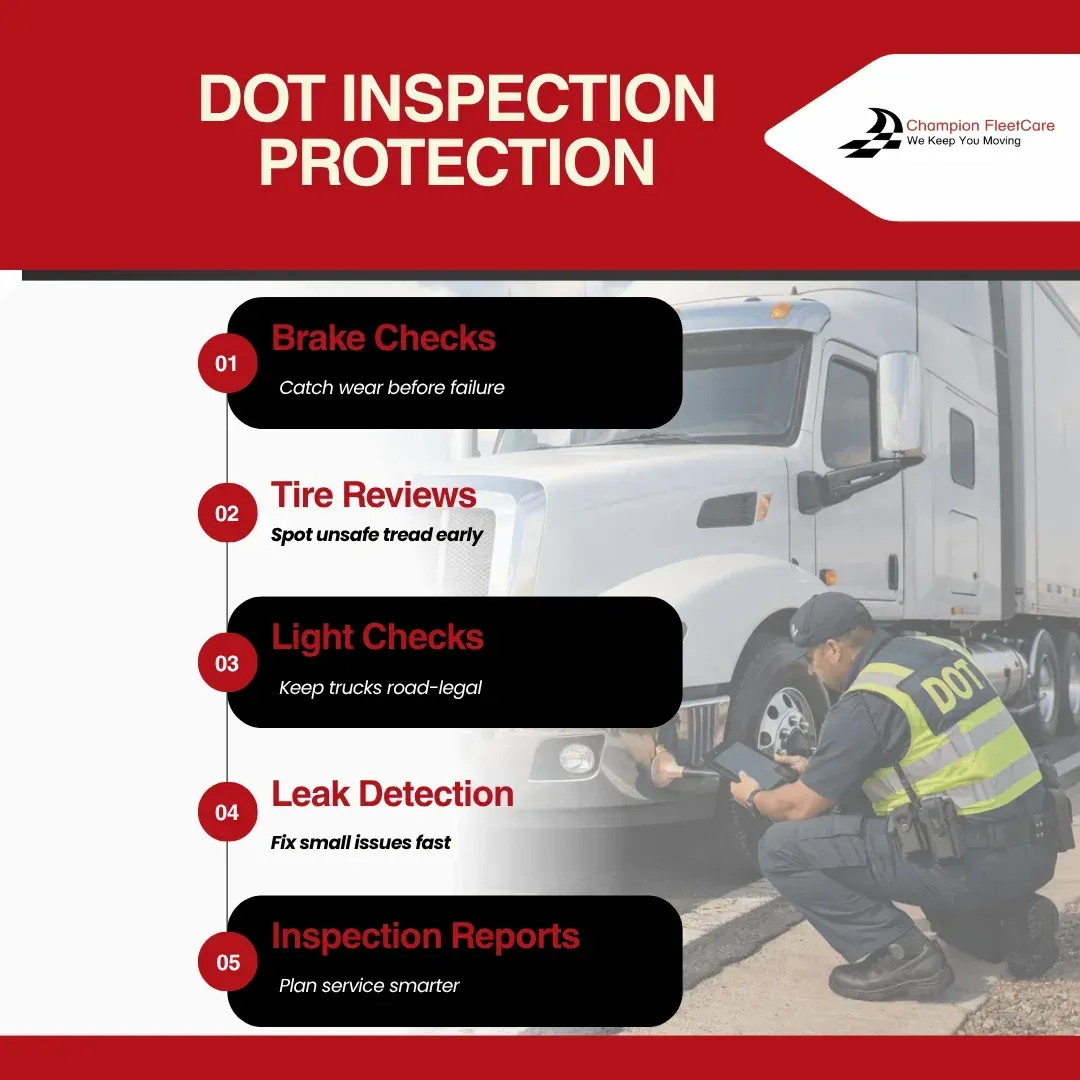
Brake, tire, light, and steering system inspection points
Brakes, tires, lights, and steering are some of the most important areas to inspect. These systems directly affect whether the vehicle can operate safely and predictably under normal fleet use. This is especially important for trucks dealing with local delivery work, repeated stops, mixed weather, and heavier commercial use around Lenexa and the broader Kansas City area.
Fluid leaks, suspension wear, and other major safety concerns
Fluid leaks, suspension wear, and other visible safety issues should also be part of the checklist. These are often the kinds of problems that start small but grow if the truck stays in service too long without attention.
At Champion FleetCare, we see how often these details affect uptime for working commercial vehicles. A truck does not need a catastrophic failure to become expensive. Sometimes, it only needs one ignored leak or one missed wear item.
How Regular DOT Inspections Prevent Expensive Repairs
Inspection routines help protect more than compliance. They also help control repair cost.
Catching small issues before they turn into major component failures
A cracked hose, weak brake component, worn tire, or loose steering part may still be manageable when found early. The same issue can become much more expensive if it leads to collateral damage or a roadside breakdown later. That is why preventive DOT inspections are so useful. They give fleets a better chance to repair problems while they are still smaller, simpler, and easier to schedule.
How scheduled inspections help reduce downtime and repair costs
Scheduled inspections support better planning. Instead of reacting to whatever fails next, fleet managers can build service around known vehicle condition.
That can reduce downtime, improve labor planning, and help avoid emergency repair situations that disrupt routes and customer commitments. We also provide electronic inspection reports with photo documentation, which helps make those service decisions clearer for fleet operators.
DOT Inspections Support Safer Drivers and Vehicles
A safer fleet is usually a better-performing fleet. Drivers operate with more confidence when the equipment is being checked consistently and known issues are not left unresolved.
Why compliance checks improve on-road safety for fleet trucks
Compliance checks matter because they reinforce safe operating condition. A truck with sound brakes, proper lighting, stable steering, and good tire condition is simply less likely to create a dangerous situation on the road. That matters even more for medium-duty and heavy-duty vehicles, where small issues can have much bigger consequences once the truck is loaded and moving.
How inspection consistency helps drivers report issues sooner
Consistent inspections also help drivers take vehicle changes more seriously. When inspection and reporting are part of the fleet culture, drivers are more likely to mention a warning sign before it becomes a larger problem. That creates better communication between the driver, the maintenance team, and the fleet manager. Over time, that usually leads to fewer surprises and better service decisions.
Why Local Fleet DOT Inspections Matter in Lenexa, KS
Local support matters because fleet service is not theoretical. It happens in real traffic, real weather, and real work conditions.
Benefits of routine DOT inspections in Lenexa, KS for regional fleets
For DOT inspections Lenexa KS fleets depend on, regional conditions play a role. Trucks in this market may be dealing with stop-and-go traffic, warehouse routes, suburban delivery patterns, industrial parks, and wider Kansas City metro miles all in the same week. That kind of varied use makes regular inspections even more valuable. The trucks may not all wear the same way, even when they are in the same fleet.
How local service support keeps trucks ready for daily operations
A local service partner can help make the inspection process easier to schedule and easier to act on. That matters when a truck needs a quick decision instead of a long delay. Champion FleetCare supports fleets throughout Lenexa, Olathe, Overland Park, and the surrounding Kansas City metro with mobile and in-shop service, which helps reduce transport hassle and keep commercial vehicles closer to work.
Build Preventive DOT Inspections Into Your Fleet Maintenance Plan
The best inspection program is not separate from maintenance. It is part of it.
How inspection scheduling improves long-term fleet planning
Inspection scheduling gives fleet managers more control over timing. When DOT checks are built into a broader maintenance plan, it becomes easier to group service, track wear trends, and avoid last-minute issues. That usually leads to better planning over the long run. It also helps reduce the chaos that comes from treating inspections as stand-alone events.
Why documented inspections help support smarter service decisions
Documented inspections help fleets make smarter decisions because there is a clear record of what was found and when. That makes it easier to compare vehicle condition over time and decide where to spend maintenance dollars first. We issue proper DOT inspection reports and decals once a vehicle meets federal requirements, which helps fleets stay organized and better prepared for daily operations and compliance expectations.
Schedule Fleet DOT Inspections in Lenexa, KS with Champion FleetCare
If your fleet needs a more consistent inspection routine, we can help. We provide DOT inspections, fleet maintenance, and mobile or in-shop support for commercial vehicles across the Kansas City metro. Our shop is located at 13711 W 107th St, Lenexa, KS 66215, and our listed phone number is (913) 498-9999.
Frequently Asked Questions
How often do fleet trucks need a DOT inspection?
For covered commercial motor vehicles, an annual inspection is required at least once every 12 months. Many fleets also perform more frequent preventive inspections because waiting for the annual deadline alone does not do much to prevent day-to-day breakdowns.
What does a DOT inspection usually include?
A DOT inspection typically includes major safety systems such as brakes, tires, steering, lights, suspension, and other items covered under federal inspection standards. The exact review may vary by vehicle condition and service process, but the goal is to confirm the truck meets required safety expectations.
Can preventive DOT inspections really reduce downtime?
Yes. When fleets inspect trucks regularly, they have a better chance of finding problems while they are still smaller and easier to schedule around, which helps lower the risk of surprise downtime.
Why does local DOT inspection support matter?
Local support matters because fleet issues often need quick action. A nearby team that understands Lenexa and Kansas City fleet operations can make scheduling, follow-up, and repair planning much more practical for busy fleets.
Do DOT inspections help with fleet planning too?
Yes, they do. Regular inspections create better documentation, better repair timing, and better visibility into which trucks need service first, which makes the whole maintenance plan easier to manage.
Takeaways
Regular DOT inspections protect fleets in two ways. They support compliance, and they help catch the kinds of wear and safety issues that often lead to expensive downtime when they are missed. For fleet managers, the smartest move is to treat inspections as part of the preventive maintenance plan, not as a separate obligation. That approach usually leads to safer trucks, better planning, and fewer costly surprises on the road.