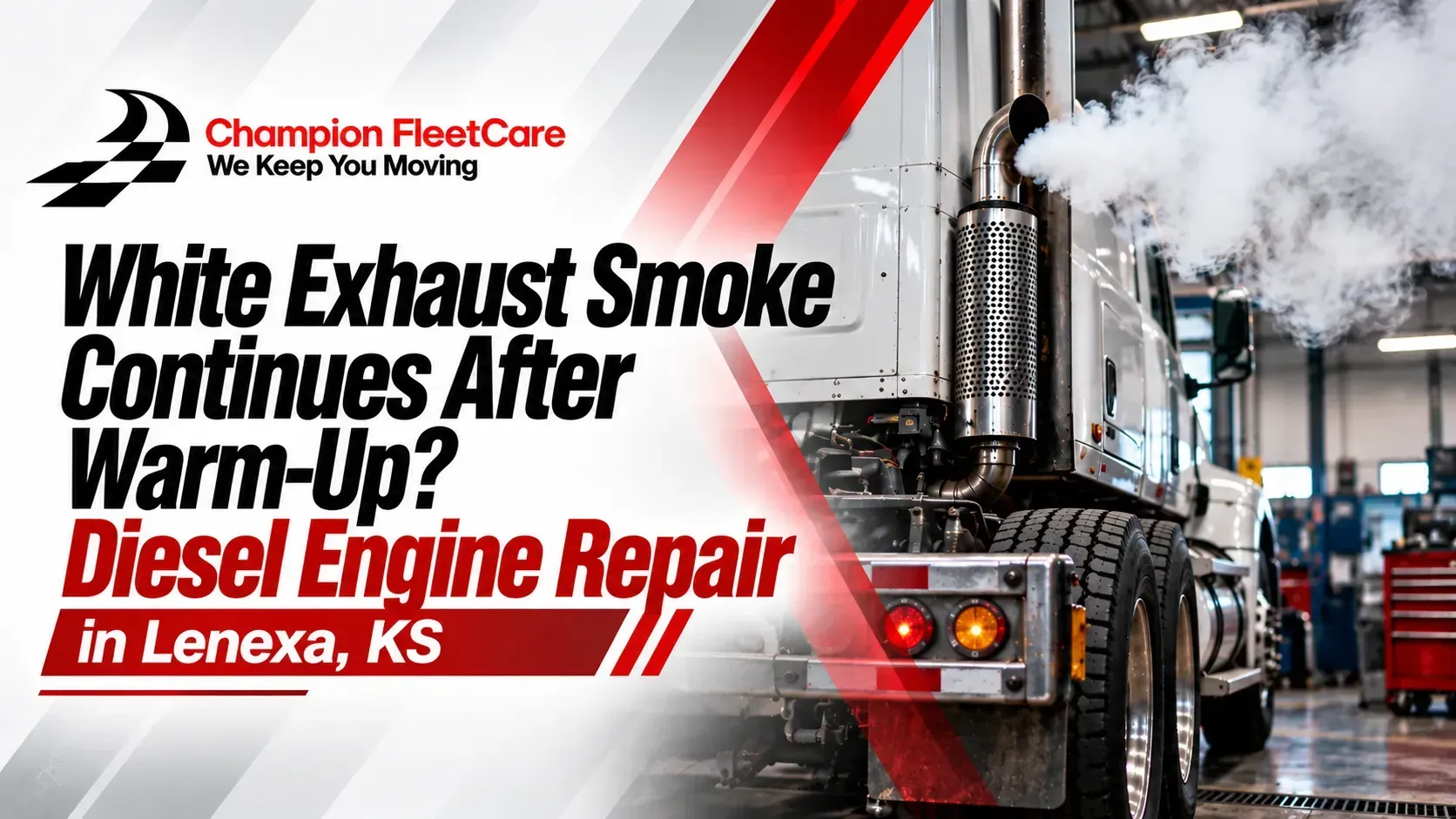
A brief cloud of white vapor can be normal on a cold Kansas morning, but it should fade as the engine reaches operating temperature. If white exhaust smoke continues after warm-up, coolant or unburned fuel may be entering the exhaust. Our
diesel engine repair in Lenexa, KS, includes system testing to identify the cause before any repair decisions are made.
Why White Exhaust Smoke After Warm-Up Matters
Persistent white smoke means the engine or cooling system needs a closer look. Color alone cannot identify the failed part, but timing, odor, engine behavior, and fluid levels provide useful clues.
Normal Condensation Clears as the Engine Warms
Water vapor can collect in a cold exhaust system and appear as a thin white cloud after startup. It usually becomes lighter as the exhaust heats. Cool, damp fall mornings in Lenexa can make this normal vapor easier to see.
Persistent Smoke Points to an Ongoing Fault
Thick smoke at operating temperature is different from brief condensation. A diesel truck white smoke concern may involve coolant intrusion, poor fuel atomization, incorrect injection, or low compression. The Kansas Clean Diesel Program also highlights the air-quality importance of reducing diesel exhaust.
Common Causes of White Smoke From a Diesel Truck
White diesel smoke often comes from coolant vapor or fuel that did not burn completely. Several faults can create either condition, so testing should come before parts replacement.
Coolant Can Enter the Combustion Path
A failed head gasket, damaged cylinder head, cracked casting, or leaking EGR cooler can admit coolant to the combustion path. Signs may include sweet-smelling smoke, coolant loss, cooling-system pressure, or overheating. Never open a hot pressurized cooling system.
Unburned Fuel Can Leave the Exhaust White
An injector that leaks, sticks, or sprays poorly may send fuel through a cylinder without complete combustion. Fuel-pressure, injection-control, or timing faults can do the same. A diesel injector diagnosis compares scan data and cylinder performance before parts are replaced.
Low Compression Can Disrupt Combustion
Diesel fuel needs enough heat and compression to ignite correctly. Worn rings, poor valve sealing, or another cylinder fault can leave a pale fuel haze. Glow-plug or intake-heater trouble is usually most noticeable during cold starting.
Clues That Help Narrow the Cause
Safe driver observations can shorten diagnostic time. Record when the smoke starts, whether it changes under load, and which warning lights appear. Do not stand in the exhaust stream.
Coolant Loss, Odor, and Temperature Changes
Check coolant only when the engine is cold and follow the manufacturer’s procedure. Repeated top-offs, residue, a sweet exhaust odor, or rising temperature make coolant intrusion testing important.
Rough Running, Hard Starts, and Fuel Odor
Unburned fuel may come with rough idle, misfire, hard starting, uneven power, or a raw diesel odor. Note whether it appears after an overnight stop, at idle, or while pulling onto I-35 or I-435.
When to Park the Truck
Park the truck if smoke becomes dense, the engine overheats, coolant drops quickly, a shutdown warning appears, or the engine runs severely rough. Arrange mobile support or shop service based on its condition.
How Diesel Engine Repair in Lenexa, KS, Finds the Fault
Diagnosis should confirm whether the engine is burning coolant, passing unburned fuel, or losing compression. At Champion FleetCare of Kansas City, we combine visual checks, scan data, system tests, and manufacturer procedures.
Cooling-System and Coolant Intrusion Tests
A technician can inspect coolant, pressure-test the cooling system, and look for leakage. Further tests may check combustion gases, the EGR cooler, or cylinder sealing. The engine design and symptoms determine the test path.
Injector and Cylinder Performance Tests
Scan data, balance tests, fuel-pressure checks, and return-flow testing can reveal an injector or fuel-control problem. Compression testing may follow when a mechanical concern remains. Our Hino truck repair includes J05E and A09 engine diagnostics, fuel-system checks, and injector testing.
A Repair Plan Based on Confirmed Results
The repair may involve an injector, EGR cooler, head gasket, cylinder-head work, or another verified component. Final checks should confirm a stable coolant level, smooth operation, fault-code status, and clean, warm exhaust. Extensive damage may require engine work.
Reducing Repeat Smoke Problems Across a Fleet
Consistent records make smoke concerns easier to spot across a fleet. Track coolant use, cold-start behavior, fault codes, and driver reports. Our fleet maintenance services can organize inspections around mileage, operating conditions, and business needs.
Champion FleetCare of Kansas City supports diesel trucks and fleets from our Lenexa shop and through mobile service when appropriate. Before fall and winter routes, clear driver notes help us separate seasonal vapor from an engine fault.
Takeaways
White vapor at a cold start may be normal, but it should fade as the diesel engine warms. Persistent smoke can come from coolant intrusion, unburned fuel, poor injection, or low compression, and the accompanying symptoms help guide testing.
Park the truck when smoke is dense, coolant is dropping, the engine overheats, or it runs severely rough. Diesel engine repair in Lenexa, KS, can test the cooling, fuel, and cylinder systems and build a repair plan from confirmed results.
Frequently Asked Questions
Is white smoke normal when a diesel engine first starts?
Yes, a thin white vapor can be normal during a cold start because condensation is leaving the exhaust. It should become lighter as the engine and exhaust system warm, especially when the weather is cool and damp.
Why does white smoke continue after my diesel warms up?
White smoke that continues after warm-up may mean coolant or unburned fuel is entering the exhaust. Injector faults, cooling-system leaks, incorrect injection, and low compression are possible causes that require testing.
Can a bad injector cause white exhaust smoke?
Yes, a leaking or poorly atomizing injector can leave fuel partly unburned and create white or pale exhaust smoke. Injector tests, scan data, and cylinder comparisons can confirm whether the injector is responsible.
Can I drive a diesel truck that is blowing white smoke?
You may be able to drive a diesel truck with light white smoke, but dense or persistent smoke can indicate a problem requiring immediate attention. Park the truck if coolant is disappearing, the temperature rises, a shutdown warning appears, or the engine runs severely rough. Light smoke still needs timely diagnosis if it remains after warm-up, even when the truck seems to drive normally.
Do you diagnose white smoke on different commercial trucks?
Yes, we diagnose excessive exhaust smoke on light-, medium-, and heavy-duty commercial trucks. Mobile or in-shop service depends on the symptoms, vehicle condition, and tests required.
Schedule Diesel Engine Repair in Lenexa
Persistent white smoke deserves diagnosis before the next route.
Schedule diesel engine service with Champion FleetCare of Kansas City or call
(913) 498-9999. Visit us at
13711 W 107th St, Lenexa, KS 66215 for an engine inspection and clear repair recommendations..