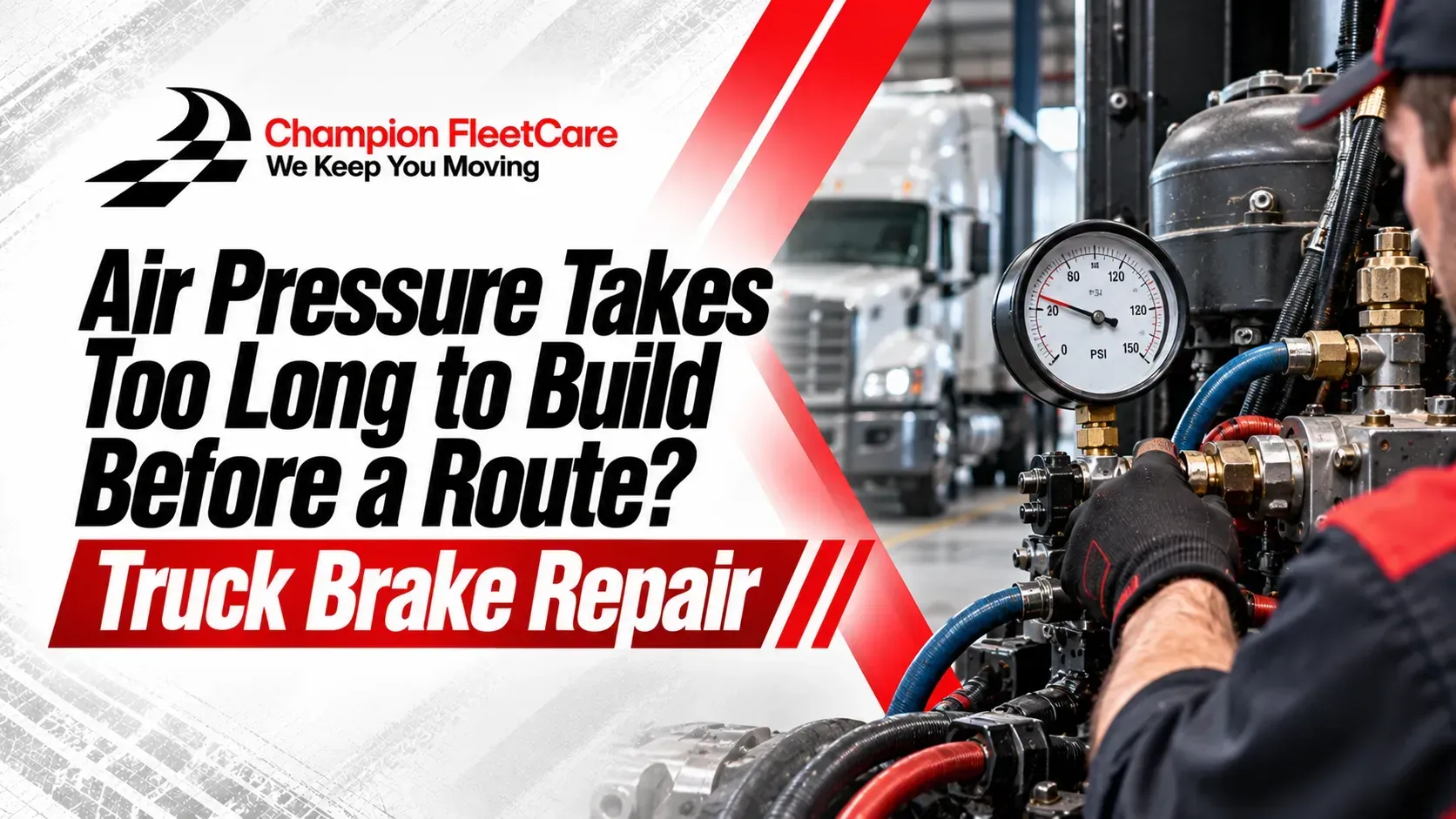
Air pressure that takes too long to build can delay a route and signal a fault in the braking system. The cause could be an air leak, weak compressor output, or another control problem.
Our
brake repair in Lenexa, KS, includes diagnostics for compressors, tanks, valves, chambers, and air lines. Prompt truck air brake repair can help identify the source of the problem before it causes further delays.
Why Truck Air Pressure Builds Slowly
Slow pressure build-up usually means compressed air is escaping, being produced too slowly, or meeting a restriction. The gauge symptom may look the same even though the repair can involve different parts.
Air Leaks Drain Compressor Output
Leaks can release air as quickly as the compressor supplies it. Worn hoses, loose fittings, damaged brake chambers, leaking valves, and tank drain problems can all contribute to slow air pressure buildup. A small leak may be easiest to notice in a quiet Lenexa yard before traffic and engine noise increase.
Compressor or Governor Problems Limit Recovery
The compressor supplies the system, while the governor controls when it loads and unloads. If the compressor is worn, its intake is restricted, or the governor does not control it correctly, air pressure builds slowly. A proper air brake compressor diagnosis should check actual system behavior instead of relying on a gauge reading alone.
Air Dryer and Tank Problems Restrict the System
The air dryer helps manage moisture before air reaches the reservoirs. A restricted dryer, a faulty purge component, excess moisture, or a problem at a tank can interfere with normal build-up. These concerns can become more noticeable during Kansas City cold snaps, when moisture in the system may freeze.
What Drivers Should Check Before Moving the Truck
Drivers should follow the fleet pre-trip procedure and confirm the system reaches its normal operating range before moving. The Kansas Commercial Driver’s License handbook explains key air brake components and inspection steps. If the low-air warning stays active or pressure does not build as expected, keep the truck parked.
Watch the Gauges and Warning Devices
Compare both air gauges, if equipped, and note whether one circuit rises differently from the other. Watch the low-air warning and listen for changes in compressor cycling. Do not bypass a warning or assume extra idle time makes a recurring problem acceptable.
Listen for Leaks During the Pre-Trip Check
With the truck secured and the fleet procedure followed, listen for steady hissing near tanks, lines, valves, and brake chambers. A technician can perform controlled leak tests and use approved detection methods. Drivers should record the area of the sound without crawling under an unsupported vehicle.
Record How the Problem Changes
Useful details include outside temperature, the time needed to build pressure, whether the truck sat overnight, and whether the symptom appears after brake applications. Those notes help separate a cold-weather restriction from a leak or weak compressor. Fleets can also pair brake concerns with a DOT inspection for trucks and trailers when an inspection is due.
How Truck Air Brake Repair in Lenexa, KS, Finds the Cause
Accurate diagnosis measures how the full system behaves under controlled conditions. At Champion FleetCare of Kansas City, we inspect the air supply and delivery sides rather than treating slow build-up as one specific failure. This approach supports a focused commercial truck brake service plan.
Air Build-Up and Leak Testing
Testing starts with gauge behavior, build-up time, compressor cycling, and system leakage. The technician checks whether pressure rises evenly and whether it holds after the compressor stops loading. Results help narrow the fault to air production, storage, or delivery.
Compressor, Governor, and Dryer Inspection
The next step checks compressor output, governor control, intake condition, discharge plumbing, and dryer operation. Oil or moisture where it should not be can provide another clue. The exact inspection follows the truck’s system design and manufacturer procedures.
Valves, Tanks, Lines, and Chambers
Air tanks, drain valves, supply lines, relay valves, protection valves, and brake chambers need a close look for leaks, damage, and restriction. Our Freightliner truck repair work includes air brake diagnostics for commonly used commercial models.
Preventing Slow Air Pressure Build-Up Before Routes
Regular inspections make pressure problems easier to catch before a scheduled departure. Drivers can report longer build times, new hissing, frequent compressor cycling, unusual moisture, or warning changes as soon as they appear. Maintenance records then show whether the symptom is new, seasonal, or becoming more frequent.
Champion FleetCare of Kansas City supports commercial trucks, trailers, buses, and fleet vehicles from our Lenexa shop and through mobile service. A planned inspection before peak delivery periods can reduce last-minute surprises at yards near I-35, I-435, and K-10. Some repairs can be handled on-site, while deeper testing may require shop equipment.
Takeaways
Slow air pressure build-up can come from leaks, weak compressor output, governor trouble, dryer restriction, moisture, or faults in tanks, valves, lines, and chambers. The gauge symptom alone does not identify the failed part, so a system test should guide the repair.
Keep the truck parked if the system does not reach its expected operating range or a low-air warning remains active. Truck air brake repair in Lenexa, KS, can confirm the cause and verify normal build-up before the vehicle returns to its route.
Frequently Asked Questions
Why does my truck take so long to build air pressure?
Your truck may have an air leak, weak compressor output, a governor control problem, dryer restriction, or a fault in a tank, valve, line, or brake chamber. Testing the complete system is the most reliable way to identify which condition is slowing pressure build-up.
Can an air leak cause slow pressure build-up?
Yes, an air leak can make the compressor run longer because pressure escapes while the system fills. The leak may be at a hose, fitting, valve, tank drain, chamber, or another connection, so controlled testing is important.
Can cold weather slow air pressure build-up?
Yes, cold weather can reveal moisture or restriction problems in an air brake system. A dryer or drainage issue may allow moisture to collect and freeze, so repeated slow build-up on cold Kansas mornings deserves inspection.
Is it safe to drive before full air pressure builds?
No, do not move the truck until the air system reaches the required operating range and warning devices clear according to the vehicle and fleet procedure. If pressure will not build normally, keep the truck parked and arrange service.
Do you offer mobile air brake repair in Kansas City?
Yes, we offer mobile truck repair throughout the Kansas City area, including air brake diagnostics and repairs when the job can be completed safely on-site. Some pressure problems need shop-based equipment, so our team will help determine the appropriate service location.
Schedule Truck Air Brake Repair in Lenexa
Do not let a repeated pressure delay become part of the morning routine.
Schedule air brake service with Champion FleetCare of Kansas City or call
(913) 498-9999. Our shop is located at
13711 W 107th St, Lenexa, KS 66215. We can inspect the system, explain the findings, and recommend the repairs needed for dependable pressure build-up.