

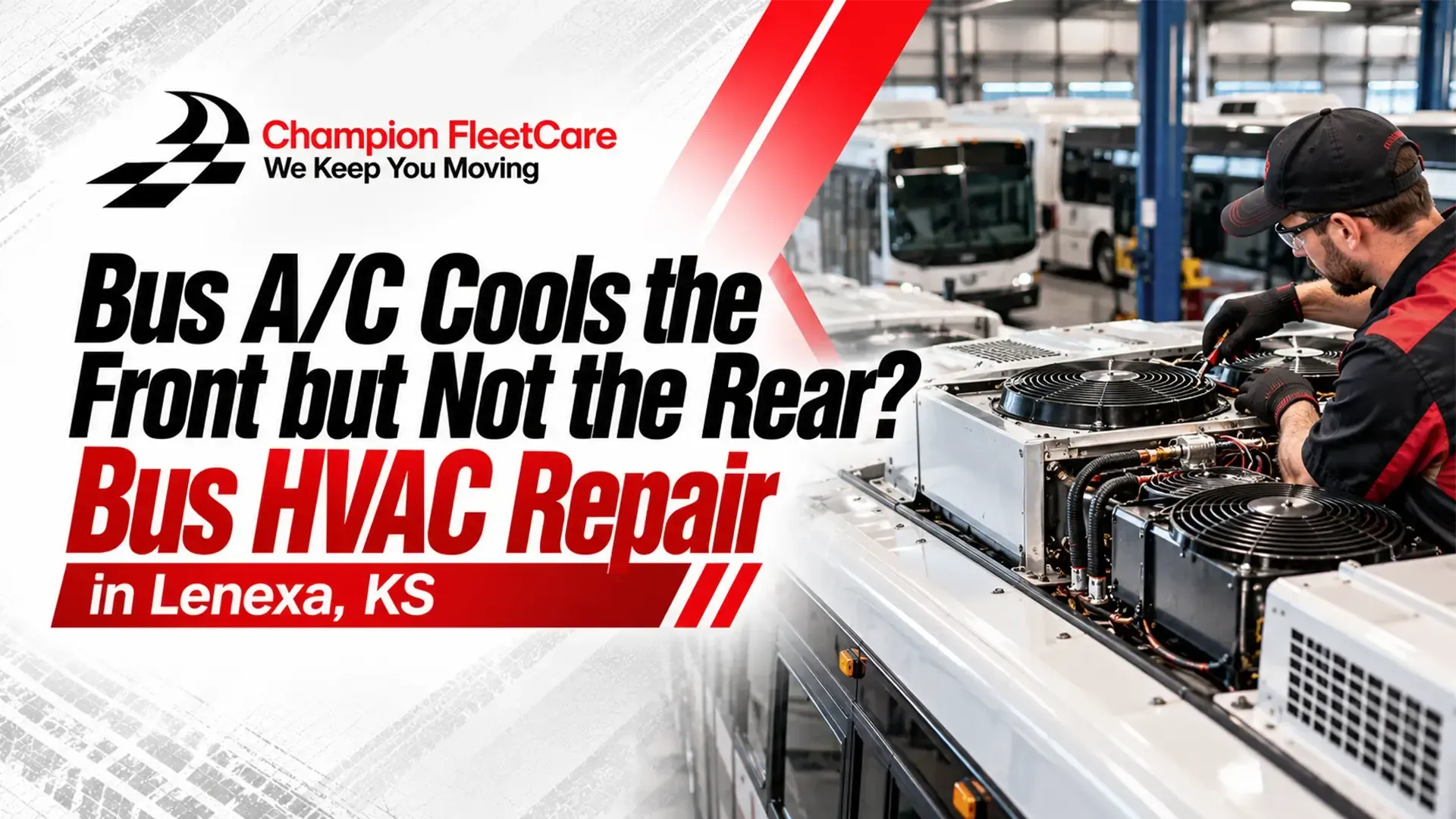
When a bus A/C cools the front but not the rear, the rear HVAC zone may have an airflow, refrigerant, control, or electrical fault. Drivers and passengers notice uneven bus A/C cooling when the front feels comfortable but the rear stays warm. Our
AC diagnosis and repair process checks system performance before parts are replaced. Testing both zones shows whether the problem affects the full circuit or only the rear equipment.
Why the Front A/C Can Be Cold While the Rear Is Warm
Front-to-rear temperature differences often happen because large buses use more than one evaporator, blower, control, or duct path. The front can keep cooling even when a rear component stops moving air or cooling it.
Separate Evaporators and Blowers Change the Diagnosis
Many school, shuttle, charter, and transit buses use a rear evaporator and blower for the passenger area. A front unit may work while a rear blower motor, relay, control, or expansion device develops a fault.
Low Refrigerant Can Affect the Rear First
Low refrigerant can reduce rear cooling when long lines and multiple evaporators share one system. The front may still feel cool while the rear coil receives too little refrigerant. A leak test and charge verification are needed before adding refrigerant.
Airflow or Control Faults Can Limit Rear Cooling
A report of warm air from rear bus vents does not always mean the refrigerant is low. A blocked return, dirty filter where equipped, failed blower, stuck valve, or incorrect rear-zone command can create a similar symptom. Electrical faults may also stop a rear fan or control module.
Checks Fleet Staff Can Make Before Service
Fleet staff can record useful observations without opening the refrigerant system. Clear notes help the technician reproduce the problem and choose the right tests.
Compare Vent Temperature and Airflow
Run the bus under the same conditions and compare front and rear output. Note whether the rear vents have strong warm airflow, weak airflow, or no airflow. That difference helps separate an air-delivery problem from a cooling problem.
Check Settings, Vents, and Visible Obstructions
Confirm that the rear HVAC switch, thermostat, or zone control is set correctly. Make sure vents are open and return-air grilles are not covered. Do not bypass fuses, jump relays, or disturb refrigerant lines.
Record When the Symptom Changes
Write down whether rear cooling improves while driving, worsens at idle, or fades after several minutes. Note the outside temperature, passenger load, unusual sounds, water near the evaporator, or cycling changes. Lenexa stop-and-go routes can make an intermittent concern easier to reproduce.
Kansas heat can affect passengers and staff when cooling plans fail. The Kansas extreme-heat guidance explains that high temperatures can cause serious heat-related illness, so fleet operators should have a safe response when cabin conditions become uncomfortable.
How Bus HVAC Repair in Lenexa, KS, Diagnoses Uneven Cooling
Professional bus HVAC repair in Lenexa, KS, should compare both zones instead of assuming the compressor is the only cause. A technician can test temperature, pressure, airflow, electrical supply, and control commands.
System Pressure and Temperature Testing
Pressure readings and vent temperatures show how the refrigerant circuit performs under load. The technician may compare line temperatures and front and rear coil behavior to identify restrictions, charge concerns, or poor heat transfer. Results must be matched to the system design and ambient conditions.
Rear Blower and Electrical Testing
Electrical testing checks whether the rear blower receives proper power and ground. Relays, fuses, switches, resistors, controllers, wiring, and connectors may need inspection when airflow is missing or changes speed unexpectedly. A scan tool may also be useful when the climate system communicates through vehicle control modules.
Leak and Component Inspection
Hoses, fittings, service ports, condensers, evaporators, and compressors should be checked for signs of leakage or damage. If a leak is found, it should be repaired before the system is recharged to the correct specification. Our bus repair and maintenance services cover HVAC and climate-control diagnosis for school, shuttle, charter, and transit vehicles.
Preventing Uneven Cooling on Kansas City Routes
Preventive checks can catch performance changes before a hot route exposes the problem. Operators should compare zone temperatures, listen for rear blower changes, keep return-air paths clear, and report leaks, odors, or unusual cycling. Cleaning and inspection intervals should follow the bus and HVAC equipment requirements.
Adding seasonal A/C performance checks to a commercial fleet maintenance program can help managers track repeat concerns across multiple buses. Champion FleetCare of Kansas City supports commercial fleets from our Lenexa shop and through mobile service when the needed work can be completed on-site.
Takeaways
If the front vents are cold but the rear stays warm, the rear zone may have a blower, control, airflow, refrigerant, or component problem. Compare the two zones, check settings and visible obstructions, and record when the symptom changes.
Professional bus air conditioning repair uses pressure, temperature, airflow, electrical, and leak testing to find the cause. A complete commercial bus climate control service should correct the verified fault and confirm that both zones cool under normal operating conditions.
Frequently Asked Questions
Why does the bus A/C cool the front but not the rear?
The rear HVAC zone may have its own blower, evaporator, control, valve, wiring, or duct problem. The front unit can continue cooling even when a rear component fails or the shared refrigerant circuit does not supply the rear zone correctly.
Can low refrigerant make only the rear vents blow warm?
Yes, low refrigerant can sometimes reduce rear cooling before the front output feels warm. A technician should test for leaks and verify the system charge because airflow and control faults can produce the same symptom.
Can a dirty filter cause weak rear bus A/C airflow?
Yes, a dirty filter can restrict rear airflow if the bus HVAC unit is equipped with one. Blocked return grilles, dirty coils, blower faults, and closed vents can also reduce air delivery.
Can a bus stay in service when the rear A/C is not working?
A bus may stay in service with failed rear A/C only if cabin conditions remain safe and applicable operating requirements are met. Service decisions also depend on passenger needs, weather, and company policy.
Do you repair A/C systems on different types of buses?
Yes, we provide HVAC diagnosis and repair for school, shuttle, charter, transit, and fleet buses. The repair plan depends on the bus configuration, climate-control equipment, test results, and whether shop or mobile service is appropriate.
Schedule Bus HVAC Repair in Lenexa
If the driver area is cool but the passenger area stays warm, schedule bus HVAC service with Champion FleetCare of Kansas City. We can compare front and rear performance, test the controls and blowers, and inspect the refrigerant system to verify the cause.
Call
(913) 498-9999 or bring the bus to
13711 W 107th St, Lenexa, KS 66215. Tell us whether the rear airflow is warm, weak, or missing, and when the symptom is most noticeable.