


If you manage a working fleet in Lenexa or across the Kansas City metro, you already know how fast downtime adds up. One truck down can disrupt routes, delay jobs, and create a ripple effect across the rest of the day.
That is why a strong fleet tune-up checklist matters. It gives your team a consistent way to stay ahead of wear, catch small issues early, and keep gas and diesel vehicles working the way they should.
We provide both mobile and in-shop fleet maintenance in Lenexa and across the Kansas City metro, supporting fleets from roughly 1 to 100 vehicles, including trucks, vans, cars, trailers, and specialized equipment.
Why Every Fleet Needs a Preventive Maintenance Checklist
Preventive maintenance is not just about checking boxes. It is about protecting uptime.
How a fleet tune-up checklist reduces downtime and repair costs
A good checklist helps your team spot problems before they turn into roadside breakdowns or expensive repairs. It also makes service more predictable, which helps with planning, budgeting, and scheduling. For fleet managers, consistency is often the biggest win. When the same core checks happen on a regular schedule, the fleet becomes easier to manage and less likely to surprise you.
Why consistent service matters for both gas and diesel vehicles
Gas and diesel units have different service needs, but both respond better to regular attention than reactive repairs. Filters, fluids, batteries, brakes, and cooling components all wear over time, no matter what fuel type the vehicle uses.
That is why a fleet preventive maintenance checklist should cover shared basics and vehicle-specific items. A mixed fleet works best when the maintenance plan reflects how each vehicle is actually used.
Engine Tune-Up Basics for Gas and Diesel Fleet Vehicles
Tune-up work is not one-size-fits-all. Gas and diesel fleets overlap in some areas, but each one also has its own maintenance priorities.
Filters, fluids, and ignition-related checks for gas engines
For gas units, tune-up basics usually include filters, fluid condition, spark-related items, battery checks, and a close look at overall drivability. These are the checks that help support smoother starts, cleaner performance, and fewer interruptions in daily use. If the vehicle is used for repeated local stops, light delivery work, or service calls, these basics matter even more. High-frequency use tends to expose small problems quickly.
Diesel-specific tune-up items for performance and reliability
For diesel vehicles, the checklist should go deeper into fuel delivery, air intake, emissions-related service items, and cooling performance. Diesel fleets often work under heavier loads and longer operating cycles, so small performance issues can build into costly downtime if they are missed. That is why a diesel fleet maintenance checklist should be built around the real demands of the vehicle, not just a generic interval.
Inspect Critical Systems That Affect Daily Fleet Uptime
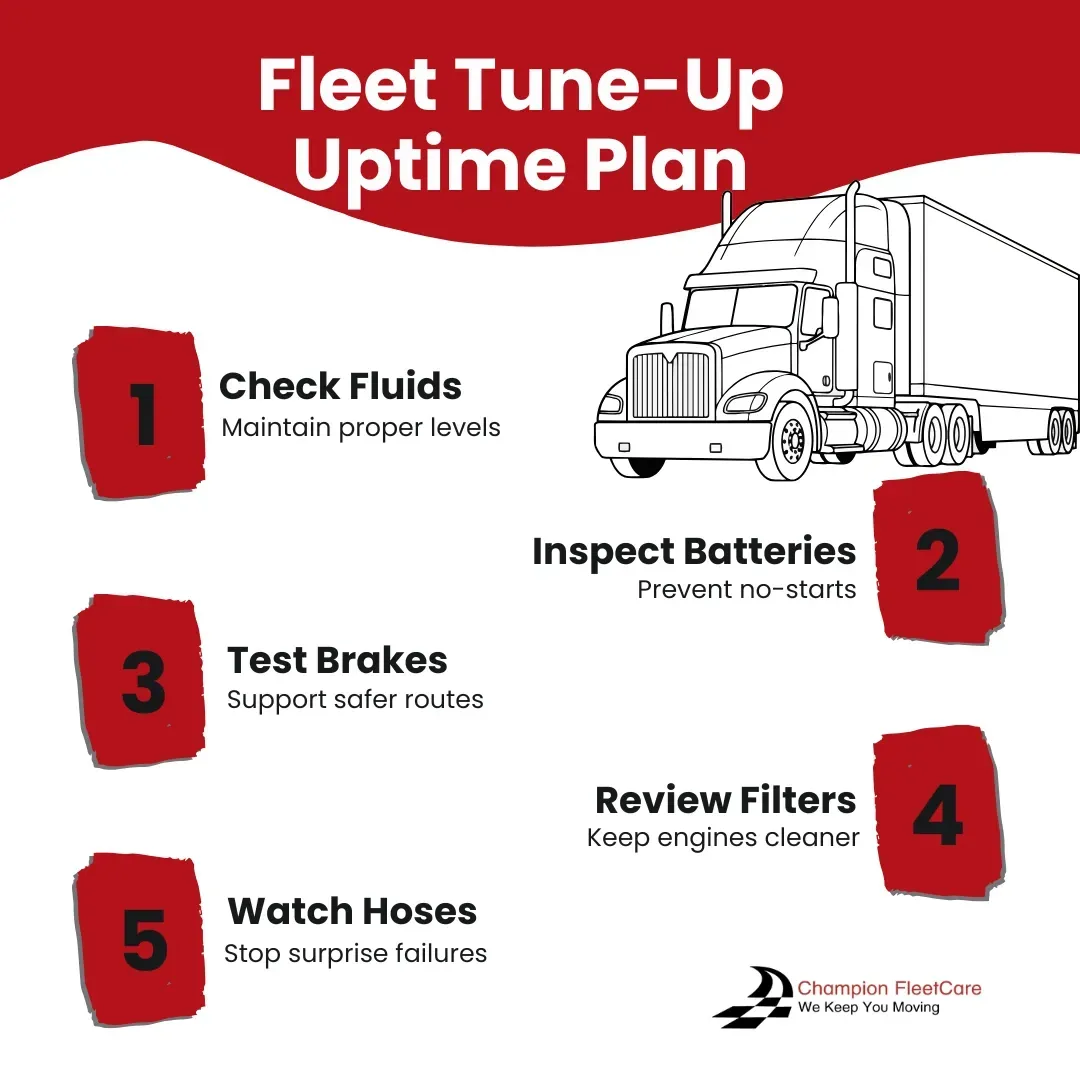
A fleet vehicle can have a strong engine and still lose a workday because of a battery, brake, or hose problem. That is why tune-up planning has to look beyond the engine bay.
Battery, charging, belts, and hoses inspection points
Battery condition should be checked regularly, especially on vehicles that sit between jobs or rely on frequent starts. Charging performance, belt condition, and hose wear also deserve attention because failures here tend to happen at the worst possible time. These are simple inspection points, but they support daily reliability. They also help prevent avoidable service calls that cut into route efficiency.
Brake, steering, and suspension checks for safer operation
Brake response, steering feel, and suspension condition all affect safety and drivability. On medium- and heavy-duty vehicles, these systems also affect driver confidence, load control, and wear on other components. A practical tune-up plan should always include these items. Reliable uptime means more than getting the engine to run.
Follow a Diesel Fleet Maintenance Checklist for Heavy-Use Vehicles
Diesel units often need more detailed preventive service because they are frequently used in harder conditions and higher-demand cycles.
Fuel system, air intake, and emissions-related service items
Fuel system condition matters because diesel performance depends heavily on proper fuel delivery and clean filtration. Air intake health matters too, especially on vehicles that deal with dust, stop-and-go traffic, and heavier operating loads.
Emissions-related service is another major point. We also offer DPF filter restoration with fast turnaround and a 1-year warranty, which is especially relevant for diesel fleets that need cleaner, more reliable emissions system performance.
Cooling system and turbo-related checks for diesel fleets
Cooling performance matters on every fleet unit, but especially on diesel vehicles that work under heavier stress. Hoses, coolant condition, radiator function, and turbo-related system checks can all play a role in preventing heat-related failures and performance loss. For heavy-use fleets, these checks should be part of the normal routine, not just something you do after a problem shows up.
Build a Fleet Preventive Maintenance Checklist Around Usage
The best maintenance plan is the one that matches how the fleet actually works.
Mileage-based vs time-based tune-up scheduling
Some fleets respond well to mileage-based intervals. Others need time-based service because vehicles idle often, run shorter routes, or sit for stretches between jobs. The right answer depends on usage, not theory. A fleet preventive maintenance checklist works best when service timing matches real-world operating conditions.
Adjusting maintenance intervals for local routes and heavy-duty service
Local route work around Lenexa, I-35, I-435, and the wider Kansas City metro often means stop-and-go wear, repeated starts, and varied load conditions. Heavy-duty service creates even more stress on brakes, cooling systems, and suspension components.
That is why maintenance intervals should be adjusted to the work. A vehicle doing daily local runs does not age the same way as one with lighter or more predictable use.
Why Local Fleet Maintenance Support Matters in Lenexa, KS
Fleet service is easier to manage when the support team understands the local operating environment and the pace of commercial work in the area.
Gas and diesel fleet maintenance needs in Lenexa, KS
Lenexa fleets often run a mix of local commercial routes, regional deliveries, and service calls across Johnson County and the Kansas City metro. That kind of use creates a wide range of maintenance needs, especially when fleets include pickups, vans, box trucks, medium-duty units, and heavier commercial vehicles. We support gas and diesel fleets through both mobile and in-shop service in Lenexa, with coverage across the broader metro area. Our technicians work on semi trucks, heavy-duty trucks, box trucks, pickups, sprinter vans, trailers, lift gates, and forklifts.
How scheduled inspections help prevent surprise breakdowns
Scheduled inspections do more than catch failures. They help fleet managers make better decisions before a unit becomes unreliable.
At Champion FleetCare, we also provide electronic inspections with photo reports, which helps support clearer repair decisions and more useful planning for fleet operators.
Keep Your Fleet Road-Ready with Tune-Up Service from Champion FleetCare
If your fleet needs a more consistent maintenance plan, we can help you build one around your actual vehicles and workload. We provide mobile and in-shop fleet service for gas and diesel vehicles in Lenexa and throughout the Kansas City metro, with support for fleets that need reliable preventive maintenance and fewer surprise breakdowns.
You can find us at 13711 W 107th St, Lenexa, KS 66215 and reach us at (913) 498-9999. We offer fleet maintenance, truck repair, mobile service, and support for a wide range of commercial vehicles and equipment.
Frequently Asked Questions
What should be included in a fleet tune-up checklist?
A strong checklist should include filters, fluids, battery and charging checks, belts, hoses, brakes, steering, suspension, and tire condition. For diesel units, it should also include fuel system, air intake, emissions, cooling, and turbo-related items.
How often should a fleet preventive maintenance checklist be used?
That depends on how the vehicles are used. Some fleets need mileage-based service, while others need time-based intervals because stop-and-go work, idle time, and heavy-duty use can age components differently.
Is diesel fleet maintenance different from gas fleet maintenance?
Yes, although there is overlap. Diesel fleets usually need more attention to fuel systems, emissions-related components, cooling performance, and other heavy-use service points.
Why does local fleet support matter so much?
Local support helps because the service team understands the routes, operating conditions, and pacing of work in the area. It also helps reduce delays when a unit needs maintenance or repair quickly.
Should fleet managers rely on mobile service, shop service, or both?
For many fleets, both make sense. Mobile service can reduce downtime for routine work or urgent issues on site, while in-shop service is often better for more involved repairs or specialized procedures.
Takeaways
A good fleet tune-up checklist Lenexa KS operators can rely on should be practical, repeatable, and built around real vehicle use. The goal is not just maintenance for its own sake. It is better uptime, lower repair risk, and a fleet that is easier to manage every day. For mixed fleets, the smartest approach is usually a preventive plan that covers both shared service basics and fuel-specific needs. That is how you keep gas and diesel units road-ready without waiting for the next surprise breakdown.