


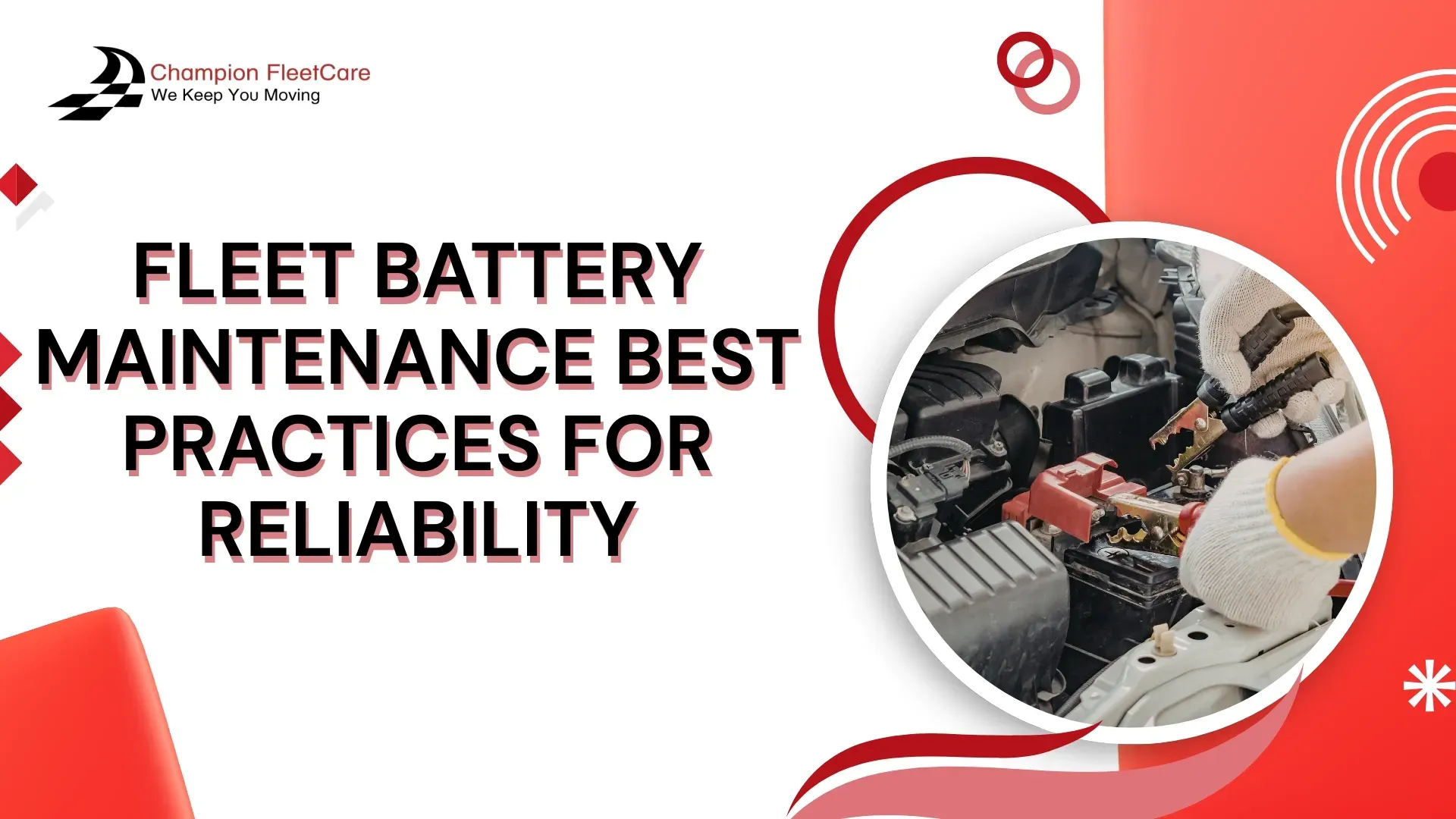
Maintaining fleet batteries is essential for reliability. Establish a consistent inspection routine to catch corrosion and loose connections early. Keep terminals and cables clean to guarantee peak performance. Use the correct battery charging tools to avoid issues, and test batteries frequently to confirm they meet specifications.
Always consider climate and duty-cycle demands to select the right battery. By applying these best practices, you’ll enhance fleet reliability and performance, and there are even more strategies to explore.

Why Fleet Battery Maintenance Matters for Uptime
Maintaining your fleet's batteries is essential for minimizing no-start downtime and ensuring smooth operations. By understanding common causes of premature battery failure, you can implement proactive measures that extend battery life and enhance reliability. Regular inspections and maintenance not only prevent unexpected breakdowns but also keep your fleet running efficiently.
How auto battery maintenance reduces no-start downtime
While it might seem like a small component, the battery plays an essential role in guaranteeing fleet vehicles start reliably. Regular auto battery maintenance can greatly reduce no-start downtime.
By checking electrolyte levels and cleaning terminals, you can prevent corrosion that leads to battery failure. Utilizing a battery trickle charger automotive can maintain ideal charge levels, especially for vehicles that sit idle for extended periods.
Implementing a proactive automobile battery maintenance schedule guarantees batteries are tested and replaced before performance declines. This approach not only enhances reliability but also minimizes unplanned service disruptions, keeping your fleet operational and efficient. Ultimately, consistent battery care translates to improved uptime and reduced operational costs.
Common causes of premature battery failure in fleets
When fleet operators overlook battery maintenance, they risk encountering premature battery failure, which can disrupt operations and lead to costly downtime.
Common causes include insufficient maintenance checks, where dirt and corrosion build up on terminals, increasing resistance and reducing efficiency. Extreme temperatures in Kansas can also affect battery performance, causing it to weaken or fail unexpectedly.
Additionally, frequent short trips can prevent batteries from fully charging, leading to sulfation and reduced lifespan. Overloading vehicles or using incompatible batteries can further exacerbate issues.
To mitigate these problems, implementing a proactive battery maintenance program is vital. Regular inspections and proper battery care can greatly enhance reliability and guarantee your fleet operates smoothly, minimizing downtime and repair costs.
Build a Consistent Battery Inspection Routine
To guarantee ideal battery performance, you should establish a consistent inspection routine for your fleet vehicles.
During weekly and monthly checks, look for signs of corrosion, loose connections, and fluid levels to proactively address potential issues. By training your drivers to report these findings, you can considerably reduce unexpected downtime and extend battery life.
Automobile battery maintenance checks drivers can report
How often do you check your vehicle’s battery? Regular inspections are vital for maintaining battery health and reliability.
Start by visually inspecting the battery terminals for corrosion, which can impede electrical flow. Verify the terminals are tight and free of any buildup.
Next, check for any physical damage, such as cracks or leaks in the battery casing. If you have a voltmeter, measure the battery voltage; a reading below 12.4 volts indicates it may need charging.
Additionally, monitor the age of your battery—most last between three to five years. If you notice signs of weakness or frequent jump-starts, report this to your maintenance team. Early detection can prevent unexpected failures and keep your fleet running smoothly.
What to look for during weekly and monthly inspections
While performing weekly and monthly inspections, it’s vital to focus on specific areas of the battery that can impact overall performance. A thorough check can prevent unexpected failures and extend battery life.
- Corrosion: Inspect terminal connections for corrosion. Clean any buildup with a wire brush and appropriate cleaning solution.
- Fluid Levels: Verify electrolyte levels are adequate in flooded batteries. If low, top off with distilled water.
- Physical Condition: Look for cracks or leaks in the battery casing. Any physical damage can lead to major issues.
Keep Terminals, Cables, and Connections Clean
Keeping your battery terminals, cables, and connections clean is essential for ideal performance. Corrosion can lead to weak starts, while loose connections might mimic battery failure, complicating troubleshooting efforts.
Regular maintenance battery maintenance guarantees reliable operation and can save you from unexpected downtime.
Preventing corrosion that causes weak starts
To guarantee reliable starts and peak performance, it’s essential to maintain clean terminals, cables, and connections. Corrosion can build up over time, leading to poor electrical conductivity and weak starts. Regularly inspecting and cleaning these components helps prevent issues before they arise.
- Use a wire brush or terminal cleaner for thorough cleaning.
- Apply a corrosion inhibitor to protect terminals after cleaning.
- Inspect cables for fraying or damage to ascertain ideal connections.
When loose connections mimic battery failure
Loose connections can often masquerade as battery failure, leading to unnecessary replacements and service disruptions. To avoid this costly mistake, regularly inspect all battery terminals, cables, and connections for tightness and cleanliness.
A loose connection can create intermittent power issues, mimicking symptoms of a dead battery. Make it a point to check for corrosion and dirt buildup, as these can exacerbate the problem. If you notice any signs of wear or fraying in the cables, replace them immediately to maintain ideal conductivity.
Tightening connections and ensuring cleanliness are simple yet effective practices that can save you both time and money on unnecessary battery replacements. Stay proactive, and your fleet’s reliability will greatly improve.
Use Battery Charging Tools the Right Way
When maintaining your fleet, knowing when to use a battery trickle charger can considerably extend the life of parked units. It's essential to follow safe charging practices to safeguard both the batteries and the vehicle's electronics. Implementing these techniques will guarantee peak performance and reliability across your fleet.
When to use a battery trickle charger (automotive) for parked units
Although prolonged inactivity can drain a vehicle's battery, using a battery trickle charger for parked units can effectively maintain optimal charge levels. These chargers are perfect for vehicles that sit idle for extended periods, guaranteeing batteries remain healthy and ready for use.
Here are some ideal times to use a trickle charger:
- Seasonal storage: If you’re storing vehicles for winter or summer, a trickle charger can prevent battery degradation.
- Low-utilization fleets: For fleets with sporadic use, maintaining charge levels can minimize starting issues.
- Emergency vehicles: Keeping batteries topped off in emergency response units guarantees readiness when needed.
Implementing a trickle charger is a proactive approach to avoid unexpected battery failures in your fleet.
Safe charging practices to protect batteries and electronics
Maintaining ideal battery health extends beyond simply using a trickle charger; it also involves adhering to safe charging practices to protect both batteries and sensitive electronics.
Always use a charger compatible with your battery type, as mismatched voltages can lead to overcharging or damage. Before connecting, verify terminals are clean and free of corrosion. Use insulated tools to prevent accidental short circuits.
Monitor the charging process—never leave batteries charging unattended, especially in confined spaces. Implement temperature controls in charging environments to avoid overheating. Finally, disconnect the charger properly to prevent arcing, which can damage electronic components. By following these practices, you’ll enhance battery lifespan and maintain the integrity of your fleet’s electronic systems.
Test Batteries and Charging Systems Proactively
To guarantee your fleet's batteries are in ideal condition, it's essential to conduct load testing and voltage checks regularly. These assessments help confirm battery health and can identify alternator-related issues that may cause recurring battery failures.
By proactively addressing these factors, you can greatly reduce unexpected downtime and enhance overall fleet reliability.
Load testing and voltage checks to confirm battery health
Since a fleet's efficiency hinges on reliable battery performance, conducting regular load testing and voltage checks is essential for confirming battery health.
These proactive measures help identify weaknesses before they escalate into critical failures, guaranteeing your vehicles remain operational.
- Load Testing: Simulate the battery's performance under load to assess its capacity and ability to deliver the necessary power.
- Voltage Checks: Measure the voltage to verify it’s within manufacturer specifications, indicating proper charge levels.
- Routine Schedule: Implement a regular testing schedule to catch issues early and maintain consistent reliability.
Alternator-related issues that lead to repeat battery problems
While you might regularly check your fleet's batteries, overlooking alternator health can lead to repeat battery problems that disrupt operations.
The alternator's primary role is to recharge the battery while the engine runs. If it's malfunctioning—due to worn-out diodes, loose connections, or a failing voltage regulator—the battery may not receive adequate charge, resulting in premature failure.
Regularly test your alternators alongside your batteries to guarantee they're functioning at their best. Look for signs of wear, such as unusual noises or dimming lights.
Addressing these issues proactively can prevent unexpected breakdowns and costly downtime. By maintaining both batteries and alternators, you can enhance the reliability of your fleet and keep operations running smoothly.
Plan for Climate and Duty-Cycle Demands
When planning for battery maintenance in Kansas fleets, consider both climate impacts and the specific duty-cycle demands of your vehicles. It’s essential to right-size batteries, especially for those with high electrical loads, to guarantee peak performance and longevity. By evaluating these factors, you can proactively mitigate potential issues and enhance your fleet's reliability.
Battery maintenance considerations for Kansas fleets
To guarantee peak battery performance in Kansas fleets, it’s essential to take into account both climate conditions and duty-cycle demands. Kansas experiences a wide range of temperatures, which can impact battery life and efficiency. You should consider the following:
- Regular temperature checks**: Monitor battery temperatures during extreme heat or cold to prevent performance degradation.
- Frequent inspections: Schedule routine inspections to check for corrosion, loose connections, and electrolyte levels, ensuring ideal performance.
- Adapt charging routines**: Adjust charging practices based on usage patterns and temperature changes to maintain battery health.
Right-sizing batteries for vehicles with high electrical loads
Choosing the right battery for vehicles with high electrical loads is vital, especially in Kansas, where varying climate conditions can exacerbate the demands on your fleet.
To guarantee reliability, it’s important to assess the total electrical load your vehicles will encounter during their duty cycles. This includes evaluating the power requirements of auxiliary systems like lighting, HVAC, and communication devices.
Select batteries that not only meet these demands but also provide a buffer for extreme temperatures. Opt for deep-cycle batteries designed to withstand frequent discharges, making sure they can handle high loads without compromising lifespan.
Regularly monitor battery performance and charge levels, adjusting your fleet’s battery specifications as necessary to adapt to changing operational needs and environmental conditions.
Improve Fleet Reliability with Champion Fleet Battery and Electrical Services
Maintaining your fleet's battery and electrical systems is essential for ensuring ideal performance and reliability. Champion Fleet's expert services can help you achieve this by providing tailored solutions that focus on efficiency and reliability.
- On-site inspections: Our technicians conduct thorough electronic inspections with photo reports to pinpoint issues before they escalate.
- Emergency repairs: We offer rapid response for unexpected breakdowns, minimizing downtime and keeping your fleet on the road.
- DPF filter restoration: Benefit from our fast turnaround and 1-year warranty, ensuring your vehicles meet environmental standards.
Neglecting battery maintenance can leave your fleet vulnerable to unexpected failures, costing you time and money.
By implementing these best practices, you’re not just prolonging battery life; you’re fortifying your entire operation against costly downtimes.
So, are you ready to take the necessary steps to guarantee your fleet's reliability? Don’t wait for the next breakdown to act—start your battery maintenance routine today and keep your vehicles performing at their best, no matter the challenge ahead.
Frequently Asked Questions
How Often Should I Replace Fleet Batteries?
You should replace fleet batteries every 3 to 5 years, depending on usage and environmental conditions. Partner with Champion Fleet to regularly inspect them for corrosion and performance issues, ensuring maximum reliability and minimizing unexpected downtime for your fleet.
What Are Signs of a Failing Battery?
You’ll notice dimming lights, slow engine cranking, and electrical issues when a battery’s failing. If you hear clicking sounds or smell a rotten egg odor, it’s time to contact Champion Fleet to help you inspect and possibly replace the battery.
Can Battery Maintenance Reduce Operational Costs?
Yes, battery maintenance can greatly reduce operational costs. By ensuring batteries operate efficiently, you’ll minimize unexpected breakdowns and replacement expenses, ultimately extending battery life and enhancing overall fleet performance, saving you both time and money.
How Do I Choose the Right Battery for My Fleet?
To choose the right battery for your fleet, assess your vehicles' power requirements, consider environmental conditions, and prioritize battery type based on performance. Always opt for reputable brands and guarantee compatibility with your fleet's systems.
What Tools Are Essential for Battery Maintenance?
You’ll need a multimeter for voltage testing, a hydrometer for electrolyte measurement, terminal cleaning tools, a battery charger, and safety gear. These tools help guarantee your batteries perform at their best and prolong their lifespan.