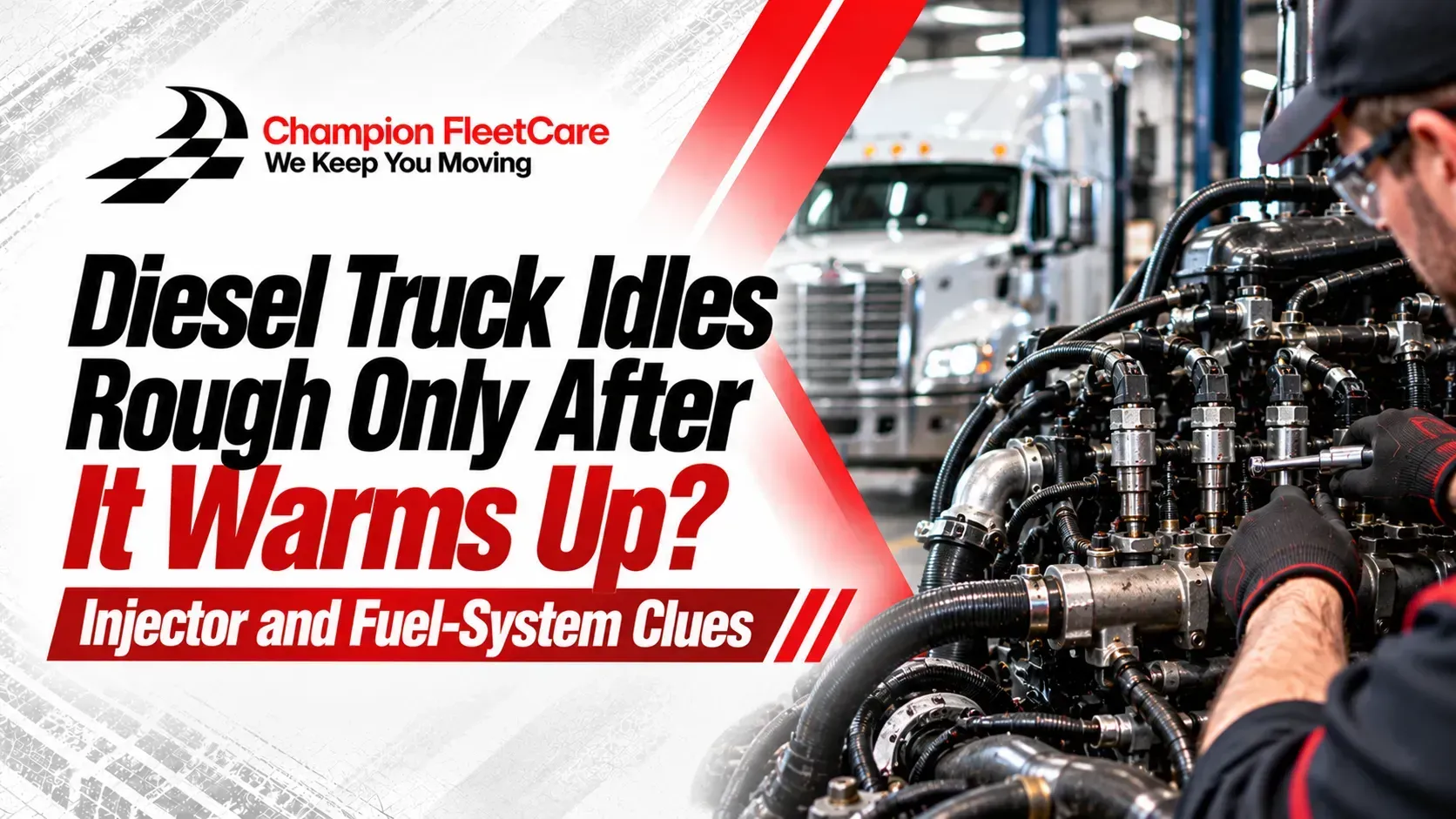
A diesel rough idle when warm often points to a fault that changes at operating temperature. Internal injector leakage, unstable rail pressure, or a faulty sensor input can each disturb combustion once the engine is hot. At
Champion FleetCare, our
diesel truck diagnostics and repair team tests those conditions before condemning any injector.
What a Diesel Rough Idle When Warm Can Reveal
A warm-only rough idle narrows the search because the engine behaves well when cold. Note when the idle changes and which symptoms appear with it.
Heat Can Expose Injector Leakage or Uneven Fueling
As a diesel warms, fuel viscosity and clearances inside high-pressure parts change. A worn injector may return too much fuel or deliver an uneven amount. One weak cylinder can create a shake or uneven exhaust note.
Diesel injector problems may also cause haze, fuel odor, or harder hot restarts. These signs overlap with low compression, wiring faults, and air-management problems, so the suspect cylinder must be confirmed.
Warm-Up Strategies Can Change Engine Behavior
Fueling and emissions controls change from startup through full operating temperature. Coolant temperature, fuel temperature, rail pressure, and EGR inputs may alter fuel delivery. A biased sensor or sticking control part may become noticeable after that transition.
Trucks that idle at Lenexa job sites, loading docks, or service calls may show this pattern. Record the temperature or run time when it begins so a technician can reproduce it.
Injector and Fuel-System Clues to Watch
Note whether the issue stays at idle or continues during a hot restart, acceleration, or loaded operation. Do not open the high-pressure system.
Uneven Exhaust, Smoke, or Fuel Odor
An uneven exhaust rhythm can suggest that one cylinder contributes less power. White or gray haze may accompany incomplete combustion, while black smoke can point toward excess fuel or limited air. A fuel odor or visible leak needs prompt attention.
High-pressure injector, pump, rail, and filtration faults can cause rough running on Ford work trucks. On Super Duty and medium-duty platforms, our Ford repair and maintenance team matches each test to the engine family.
Rail-Pressure and Restart Changes
Rail pressure that hunts or misses its commanded target can make idle uneven. Causes include excessive injector return flow, supply restriction, air entry, pressure-control trouble, or a weak pump. If the truck cranks longer after a hot shutdown, pressure retention and injector return flow should be checked.
Do not loosen a common-rail line to look for fuel because injection pressure can cause serious injury. A diesel fuel system diagnosis should use approved equipment and manufacturer procedures.
Contamination, Air, and Fuel Restrictions
Recent fueling or filter work matters. Water, debris, the wrong fuel, a restricted filter, a damaged seal, or poor priming can interrupt delivery. Report whether the symptom followed a fuel stop, repair, or long storage.
Kansas City fleets may notice it at the end of a run, idling at a dock after miles on I-35 or I-435. A commercial fleet maintenance program can document filter service and repeat fuel complaints across vehicles.
How Technicians Test a Warm Rough Idle
Diagnosis should reproduce the rough idle and compare data before and after warm-up. The truck’s evidence should guide each test.
Compare Cold and Warm Scan Data
A technician may check codes, temperatures, commanded and actual rail pressure, idle speed, and cylinder contribution data. The key is watching what changes with the idle. A code guides testing but may not identify the failed part.
Test Injector Balance and Return Flow
Cylinder balance data can show whether one cylinder is weaker than the rest. A measured injector return-flow test may reveal internal leakage. Electrical tests can find injector-circuit, connector, or harness faults affected by heat or vibration.
Check the Supply Side and Rule Out Lookalikes
The supply side should be checked for filter restriction, air entry, weak delivery, or contamination. Technicians may also inspect EGR operation, intake airflow, engine mounts, valve adjustment, and compression. This prevents a normal injector from being blamed for another fault.
When to Park the Truck and Arrange Service
Park the truck if rough idle comes with a fuel leak, heavy smoke, sharp knocking, repeated stalling, a red warning, or derate. Shut it off safely and arrange service.
If the truck remains stable without an urgent warning, limit idling and schedule diagnosis. Fleet managers can check Kansas road conditions and construction updates before moving a vehicle to the shop. Keep hands away from high-pressure lines while the engine runs.
Takeaways
A warm-only rough idle can come from injector leakage, unstable rail pressure, fuel restriction, air entry, sensor errors, EGR operation, wiring, or a mechanical fault. Temperature is a clue, not a diagnosis.
Record when it begins, smoke color, warning lights, hot-restart behavior, and recent fuel or filter work. Cold and warm testing helps avoid replacing good parts.
Frequently Asked Questions
Can a bad diesel injector cause a rough idle only when warm?
Yes, a worn or leaking diesel injector can cause a rough idle only when warm. Fuel temperature and internal clearances may make uneven delivery more noticeable, but testing must confirm it.
Why does my diesel run smoothly cold but shake at operating temperature?
Your diesel may shake because fueling, sensor inputs, EGR operation, and component clearances change as it warms. Cold and warm data can separate fuel-system trouble from air, electrical, mount, or mechanical faults.
Can a fuel filter cause a warm rough idle?
Yes, a restricted fuel filter can contribute to a warm rough idle if it limits steady fuel supply. A damaged filter seal, air intrusion, contamination, or incomplete priming after service can create similar symptoms.
Is it safe to keep driving a diesel truck that idles rough?
Usually only for a short move to the shop, and only if the idle stays stable. Park it if you see leaks, heavy smoke, severe knocking, stalling, warning lights, or derate, or if the symptom worsens.
How do technicians find the injector that is causing the problem?
Technicians identify a suspect injector through cylinder contribution data, injector correction values, electrical tests, and measured return flow. They also confirm rail pressure and rule out compression, wiring, EGR, and supply-side faults.
Schedule Warm-Idle Diesel Diagnostics in Lenexa
For diesel repair in Lenexa, KS, our team can reproduce the warm-idle symptom, review live data, and test the fuel system before recommending repairs. Champion FleetCare supports work trucks and commercial fleets across Lenexa and the Kansas City metro in-shop or by mobile service when appropriate.
Call
(913) 498-9999 to schedule service, or bring your truck to
13711 W 107th St, Lenexa, KS 66215. Share when the rough idle starts and any recent fuel or filter work so our team can focus the diagnosis..