

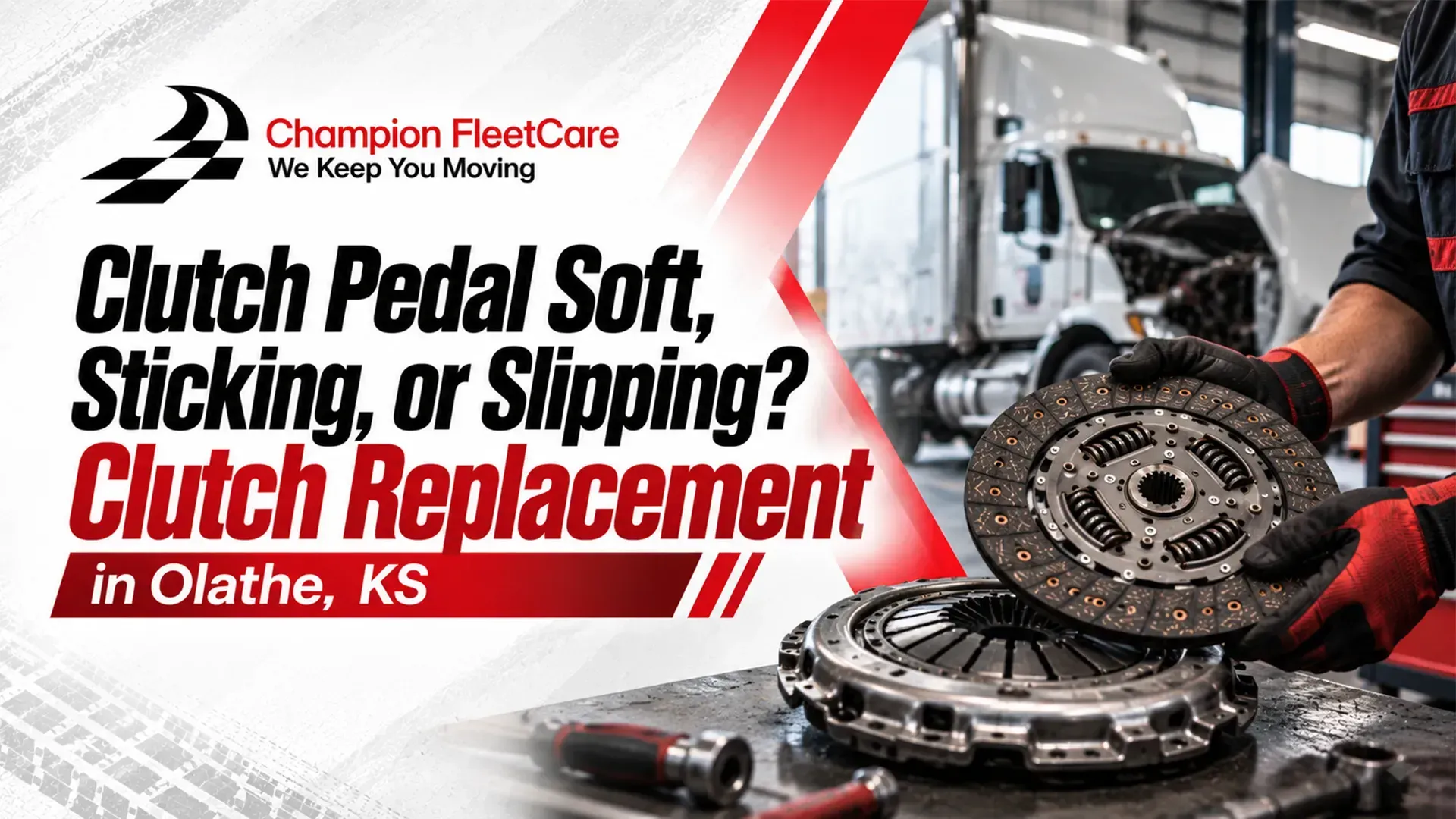
A clutch problem rarely starts with total failure. It usually begins with a pedal that feels wrong, a gear change that takes more effort, or RPMs climbing without matching pulling power. For work trucks running between Olathe, Lenexa, Overland Park, and the Kansas City metro, those warning signs can quickly affect daily operations. Missed jobs, delayed deliveries, and added transmission strain can follow if the problem gets worse. Champion FleetCare helps commercial drivers and fleet managers with clutch replacementin Olathe, KS. The shop offers in-shop service and mobile diagnostic support where possible.
Clutch Replacement in Olathe, KS: Warning Signs to Take Seriously
Clutch wear can build slowly, especially in trucks that haul weight, idle often, or move through frequent stops. The sooner you catch a change in pedal feel or shift quality, the better chance you have of limiting the repair.
Soft Clutch Pedal
A soft clutch pedal can point to low fluid, air in the hydraulic system, a weak master cylinder, or a failing slave cylinder. In some trucks, the pedal may feel light at first, then slowly lose the ability to disengage the clutch fully. Poor clutch disengagement can make shifting rough and increase gear grinding. If the pedal feel changes after a long day of hauling equipment around Johnson County or running deliveries off I-35, have it checked.
Clutch Pedal Sticking
Clutch pedal sticking is another warning sign that should not be brushed off. The pedal may return slowly, stay low, or feel like it catches before coming back up. This can happen from hydraulic issues, worn linkage, contamination, or internal clutch wear. Cold mornings and temperature swings around the Kansas City metro can also make weak hydraulic parts show symptoms sooner.
Clutch Slipping Under Load
Clutch slipping under load is one of the clearest signs that the clutch is no longer holding power correctly. You may notice the engine revving higher without the truck gaining speed, especially while pulling a trailer, climbing grades, or accelerating with a full payload. Continued slipping builds heat quickly and can damage the flywheel and pressure plate. A repair that could have been planned may then turn into a larger downtime event.
Why Clutch Problems Hit Work Trucks Hard
Manual-transmission commercial trucks deal with more stress than a personal vehicle. Payload, route type, driver habits, and traffic patterns all affect how long the clutch lasts.
Heat, Load, and Stop-and-Go Driving
Olathe-area trucks often deal with a mix of highway miles, job-site maneuvering, and stop-and-go traffic near busy commercial corridors. Repeated starts, heavy loads, and backing trailers into tight spaces all put extra heat into the clutch. Driver feedback matters because small changes can reveal early clutch trouble. If one driver reports a new smell, pedal change, or shift issue, fleet managers should treat it as useful early information.
Why Waiting Can Damage More Than the Clutch
A worn clutch can strain the transmission, driveline, mounts, and hydraulic parts. Grinding during gear changes can also point to incomplete disengagement, which may create internal wear if the truck stays in service too long. For broader drivetrain support, Champion FleetCare also provides transmission maintenance for commercial trucks across the Kansas City area. Pairing clutch checks with transmission and driveline inspections helps catch connected issues before they spread.
What a Proper Clutch Inspection Should Include
Good clutch service starts with diagnosis. Replacing parts without checking the full system can lead to repeat symptoms and avoidable downtime.
Clutch Disc, Pressure Plate, and Release Bearing
A clutch inspection should review the disc, pressure plate, release bearing, and related hardware. These parts work together, so replacing only the most obvious worn part may not solve the problem for long. For trucks used in towing, construction, delivery, and service work, commercial-grade parts are important. The replacement needs to match the vehicle’s workload, not just fit the truck.
Flywheel and Drivetrain Checks
The flywheel should be inspected for heat spots, scoring, cracks, and uneven wear. If the flywheel surface is damaged, the new clutch may chatter, slip, or wear faster. Drivetrain checks should also include mounts, input shaft condition, and signs of vibration. For fleets using Ford Super Duty and medium-duty platforms, Champion FleetCare’s Ford truck repair support can help address clutch-related drivability concerns on work-focused models.
Hydraulic Clutch System Review
Hydraulic issues can mimic clutch failure. A leaking master cylinder, weak slave cylinder, or air in the system can create a soft pedal, poor disengagement, and shifting trouble. A complete truck clutch repair in Olathe, KS, should include more than a quick road test. Fluid condition, leaks, pedal operation, and hydraulic response all help confirm what is actually failing.
How Local Fleets Can Reduce Clutch Downtime
Clutches wear out eventually, but downtime does not have to be chaotic. A planned inspection strategy gives you more control over cost, scheduling, and truck availability.
Match Maintenance to Routes and Load
A truck that spends most of its time on K-10 or I-35 may wear differently than one moving through job sites, neighborhoods, and loading areas all day. Fleet managers should build service intervals around actual use. Champion FleetCare’s commercial truck services cover complete truck systems, including powertrain, braking, electrical, hydraulics, and emissions support. For scheduled care, preventive maintenance can help spot wear before a driver gets stuck with a pedal on the floor.
Watch for Pattern Changes Between Drivers
A clutch that feels fine to one driver may feel weak to another. Track comments like “hard to get into gear,” “pedal feels low,” or “burning smell after backing.” Those small notes can show a pattern before failure. If your fleet runs between Olathe and Lenexa, local street work and seasonal route changes can also affect scheduling. Checking updates from the City of Lenexa can help when planning service around routes into the shop area. A related guide on preventive maintenance inspections can also help fleet managers think through inspection timing based on mileage, engine hours, route conditions, and weather.
Takeaways
Clutch problems usually give you warning before they stop a truck completely. A soft pedal, sticking pedal, grinding shift, burning smell, or loss of pulling power can all point to wear or hydraulic trouble. For Olathe-area work trucks, early inspection helps protect uptime, reduce repair spread, and keep routes moving. The sooner the clutch system is checked, the easier it is to plan the repair around your schedule.
Frequently Asked Questions
What does a soft clutch pedal usually mean?
A soft clutch pedal often points to a hydraulic problem, such as low fluid, air in the system, or a weak master or slave cylinder. It can also happen alongside internal clutch wear, so a full inspection is the safest next step.
Can I drive if my clutch is slipping?
Driving with a slipping clutch is risky because heat builds quickly and can damage the flywheel, pressure plate, and transmission-related parts. If the truck is losing pulling power under load, it should be inspected before it turns into a roadside failure.
Why does my clutch pedal stick sometimes?
A sticking pedal may come from hydraulic failure, linkage issues, contamination, or worn internal clutch components. If the pedal does not return normally, the clutch may not disengage fully, which can make shifting harder and increase wear.
How long does truck clutch replacement take?
Timing depends on the truck, parts availability, flywheel condition, and whether related hydraulic or drivetrain repairs are needed. Heavy-duty and medium-duty trucks often take longer because transmission removal is labor-intensive.
Should fleets inspect clutches during preventive maintenance?
Yes, clutch feel, shift quality, fluid condition, leaks, and driver complaints should be reviewed during routine service. This helps fleets plan repairs before the truck is pulled out of service unexpectedly.
Get Trusted Clutch Help from Champion FleetCare Near Olathe
If your truck has a soft pedal, sticking pedal, grinding shifts, or clutch slipping under load, schedule an inspection before the problem spreads. Champion FleetCare serves Olathe-area drivers and fleets from its Lenexa shop, just minutes away by I-35. Call (913) 498-9999 or visit 13711 W 107th St, Lenexa, KS 66215, United States to schedule clutch replacement in Olathe, KS, or nearby fleet service.