

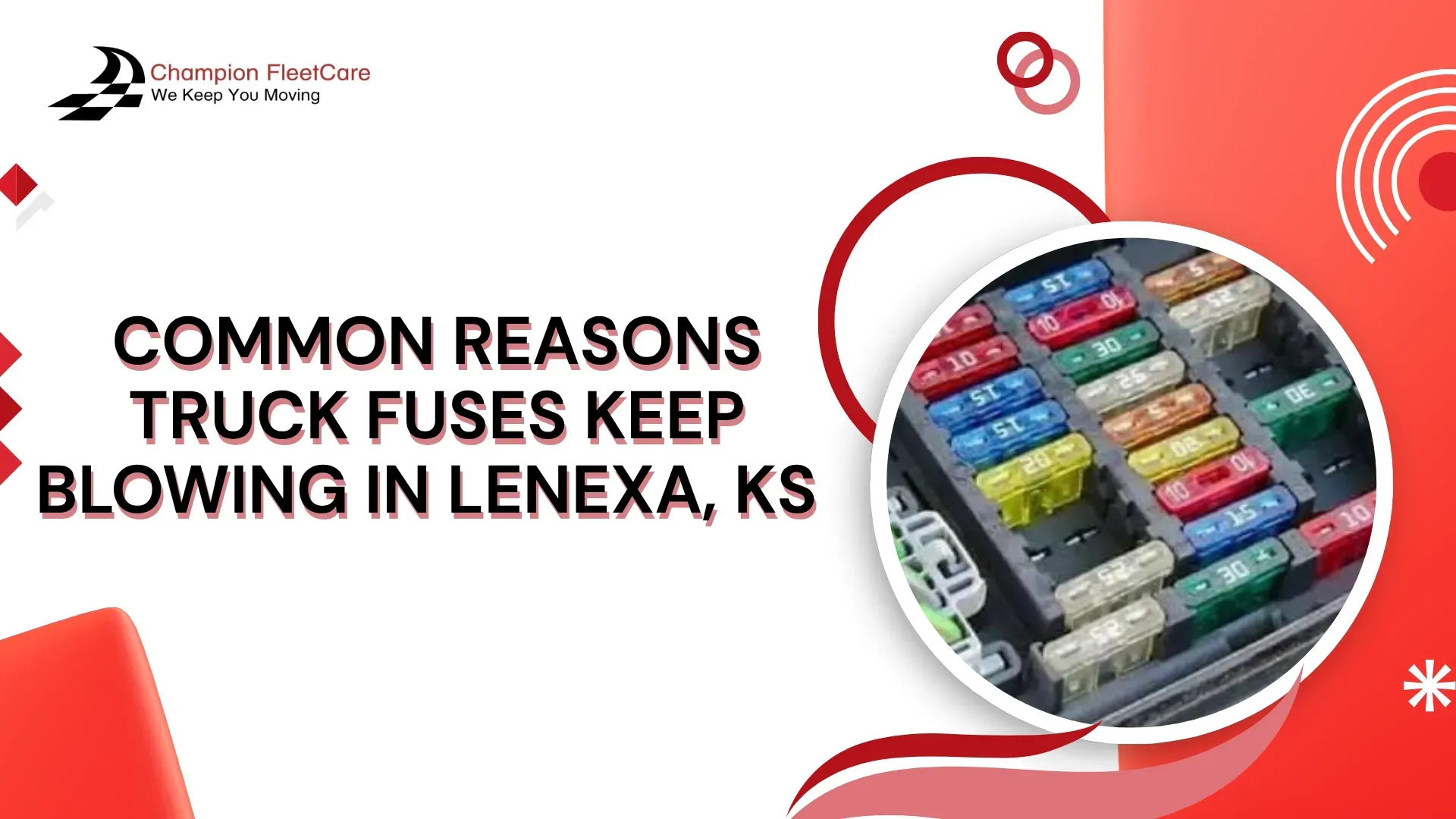
If truck fuses keep blowing in Lenexa KS, the fuse is usually not the real problem. It is the warning sign. A fuse blows when a circuit draws too much current, often because of damaged wiring, moisture, overloaded accessories, trailer lighting faults, or a failing component. For a fleet truck, that can shut down lights, HVAC, charging circuits, liftgates, sensors, or engine controls at the worst possible time. Champion FleetCare provides truck electrical diagnostics for commercial vehicles that need the root cause found before another fuse fails.

Why Truck Fuses Keep Blowing in Lenexa KS Is a Fleet Warning Sign
A blown fuse is easy to replace, which makes it tempting to treat it like a quick fix. The problem is that a fuse only responds to an electrical fault. If the fault stays in the truck, the next fuse may fail right away or later during a route.
A Fuse Is Protecting the Circuit
A fuse is designed to break the circuit before excess current damages wiring or components. That protection matters in trucks with added lighting, power equipment, liftgates, auxiliary systems, and trailer connections. When a fuse blows, it may be preventing melted wires or a more expensive electrical failure.
Replacing the Fuse Does Not Fix the Fault
If the same fuse keeps blowing, the truck needs testing. A commercial truck fuse problem can have several causes. These may include a rubbed wire, a pinched harness, water intrusion, a faulty relay, a failing motor, or an accessory drawing more power than the circuit can handle. Repeated fuse replacement only delays the diagnosis.
Upsizing a Fuse Can Damage Wiring
Installing a larger fuse is not a safe repair. The wiring, connectors, and circuit design are built for a specific load. A higher-rated fuse may let the circuit overheat instead of protecting it, which can create far bigger problems than the original fault.
Common Causes of Blown Truck Fuses
Fleet vehicles work in conditions that are hard on electrical systems. They run long hours, carry added equipment, connect to trailers, and often operate through Kansas heat, rain, road salt, and winter freeze-thaw cycles.
Shorted Wiring or Damaged Insulation
A short circuit in truck wiring can happen when a harness rubs against metal, gets pinched during a repair, melts near heat, or gets damaged by vibration. Trucks running daily through I-35, I-435, K-10, and industrial areas around Lenexa can accumulate enough vibration and wear to expose weak wiring over time.
Moisture Inside Connectors or Fuse Panels
Water intrusion can corrode terminals and create unwanted electrical paths. Rain, snow, wash bays, and road spray can all reach vulnerable connectors, especially on trucks with exterior lighting, body equipment, trailer wiring, or aging seals. Corrosion may cause intermittent fuse failures that are harder to trace.
Overloaded Accessory Circuits
Many commercial trucks carry extra electrical equipment. Work lights, inverters, GPS units, refrigeration equipment, tool chargers, cameras, and aftermarket accessories can overload a circuit if they are not installed correctly. Fleet electrical repair in Lenexa KS should include a close look at added equipment, not just factory wiring.
Failed Components Pulling Too Much Current
A motor, solenoid, pump, relay, actuator, or control module can fail internally and draw too much power. Blower motors, liftgate motors, trailer brake components, fuel pumps, and lighting circuits are common areas to inspect when fuses fail under specific conditions.
Trailer Wiring and Lighting Issues
Trailer plugs and light circuits are frequent trouble spots. A fuse may blow only when a trailer is connected, brakes are applied, reverse lights come on, or clearance lights are switched on. For contractors, delivery fleets, landscaping crews, and service vehicles around Johnson County, trailer wiring deserves careful testing.
Why Blown Fuses Can Create Fleet Downtime
A single blown fuse can affect more than one driver complaint. Depending on the circuit, the truck may lose lighting, HVAC, charging support, communication equipment, power accessories, emissions controls, or engine functions.
Electrical Faults Can Disable Key Systems
Modern trucks rely on electrical systems for far more than lights and radios. Modules, sensors, relays, network wiring, and safety systems can all be affected by a circuit fault. That is why truck electrical diagnostics in Lenexa KS should focus on the system tied to the fuse, the conditions when it fails, and the load on the circuit.
Route Trucks Need Dependable Power
A truck that blows a fuse at the shop may be inconvenient. A truck that blows a fuse during a delivery, job-site visit, roadside stop, or after-hours service call can delay the whole schedule. Mobile truck electrical repair may help when a truck cannot be moved safely or when the issue can be checked on-site.
Recurring Fuse Issues Need Documentation
Fleet managers benefit from tracking which fuse failed, when it failed, and what the driver was using at the time. Did the fuse blow when the liftgate ran? When the trailer lights came on? During heavy rain? Those details can shorten diagnostic time and reduce repeat visits.
How Technicians Find the Real Electrical Fault
Good electrical diagnostics are methodical. The goal is not to replace random parts. The goal is to prove why the circuit is drawing too much current and repair the source.
Circuit Identification and Fuse History
The technician identifies the circuit, fuse rating, connected components, and failure pattern. A fuse that blows immediately may indicate a specific problem. A fuse that fails only after the truck warms up, hits a bump, connects to a trailer, or activates an accessory may indicate a different issue.
Load Testing and Voltage Checks
Testing may include current draw, voltage drop, ground quality, relay function, connector condition, and component load. These checks help separate a bad component from a wiring fault or overloaded accessory circuit.
Wiring Inspection and Component Isolation
The circuit may need to be separated into sections so the fault can be isolated. Champion FleetCare offers in-shop diagnostics and mobile truck repair when appropriate, helping fleets get practical answers without relying on fuse swapping as the repair plan.
Takeaways
A fuse that keeps blowing is a symptom of an electrical fault. The cause may be a shorted wire, moisture, an overloaded accessory, failed component, trailer wiring issue, or poor connection. For fleet operators, repeat fuse problems can become downtime fast. Proper testing helps protect wiring, reduce repeat failures, and keep trucks ready for the next route, job, or delivery.
Frequently Asked Questions
Is it safe to keep replacing a blown truck fuse?
It is not a good long-term plan. If the same fuse keeps blowing, the circuit has a fault that needs diagnosis before wiring, connectors, or components are damaged.
Why does my truck fuse blow only sometimes?
Intermittent fuse failures often happen when a wire moves, moisture enters a connector, a component heats up, or an accessory activates. Notes from the driver can help identify the condition that triggers the failure.
Can trailer wiring blow truck fuses?
Yes, trailer wiring is a common cause of blown fuses. Damaged plugs, pinched wires, bad grounds, corroded terminals, or shorted lights can overload the truck’s lighting or trailer circuits.
Can I use a bigger fuse to stop it from blowing?
No, a bigger fuse can allow too much current through wiring that was not designed for it. That can overheat the circuit and create a more serious repair or safety concern.
Can mobile service diagnose blown fuse problems?
Often, yes, depending on the circuit and access needed. Some electrical problems can be tested on-site, while deeper wiring, module, or dash-area issues may require shop diagnostics.
Stop Repeat Fuse Problems With Champion FleetCare
If truck fuses keep blowing in Lenexa KS, Champion FleetCare can help find the reason instead of sending the vehicle back out with a handful of spare fuses. Our team works with fleet trucks, diesel trucks, service vehicles, vans, trailers, pickups, and commercial equipment that needs dependable electrical systems. Call (913) 498-9999 to schedule electrical diagnostics, or visit Champion FleetCare at 13711 W 107th St, Lenexa, KS 66215. We support Lenexa, Johnson County, and the Kansas City metro with electrical troubleshooting, fleet maintenance, commercial truck repair, and mobile service when the repair situation allows.